The Picture Perception and Discussion Test (PPDT) is a core psychological assessment used during the Stage 1 Screening of the Services Selection Board (SSB) interview. As one of the very first tests you will face, it acts as a primary filter to identify candidates who possess the right blend of observation, imagination, and communication skills.
Beyond just testing your creativity, the PPDT is designed to evaluate how you perceive ambiguous situations, express your ideas, and collaborate or lead within a team setting.
The test is broken down into two main phases:
Phase 1: Picture Perception
In this initial stage, your observation and quick-thinking skills are put to the test.
- The Observation Window: You will be shown a hazy or blurred photograph on a screen for exactly 30 seconds.
- The Writing Phase: Immediately after, you are given 4 minutes to write a realistic short story based on what you saw.
- Required Details: Your story must clearly identify:
- The total number of characters in the scene.
- The specific age, gender, and mood (positive, negative, or neutral) of each character.
- A structured plot that explains the background (what led to the current situation), the present action (what is happening in the picture), and a logical outcome (what will happen in the future).
Phase 2: Group Discussion (GD)
Once the writing phase is over, the focus shifts to your interpersonal and leadership skills.
- Individual Narration: Candidates are divided into batches of 10 to 15. You will first take turns narrating your individual story to the rest of the group.
- Collaborative Discussion: After everyone has spoken, the group must discuss the various narratives and work together to formulate one common, agreed-upon story.
- This phase heavily tests your clarity of thought, self-confidence, and ability to function as a cooperative team member.https://upsc.gov.in/
Core Objectives of the Assessors
The selection board uses the PPDT to look for specific Officer Like Qualities (OLQs), primarily focusing on:
- Your mental alertness and imaginative perception.
- Your verbal communication and ability to articulate thoughts clearly.
- Your group dynamics, including how well you listen, adapt, and lead.
- Note: You are not judged solely on the brilliance of your written story, but equally on how constructively you participate in the group discussion.
Pro-Tips for PPDT Success
To perform well in this crucial screening test, keep these strategies in mind:
- Observe Calmly: Use your 30 seconds wisely to focus on the core details of the hazy image without panicking.
- Keep it Constructive: Write a story that is highly logical, realistic, and ends on a positive note. Avoid unnecessary drama.
- Prioritize Clarity: Keep your handwriting legible and your sentence structure simple.
- Project Confidence: When it is your turn to narrate, speak loudly and clearly.
- Be a Team Player: During the GD, listen respectfully to others. Help guide the group toward a common conclusion without arguing or showing aggression.
Ultimately, clearing the PPDT requires consistent practice, a strong presence of mind, and an unwaveringly positive attitude.
What is PPDT and Why is it Important?
Let me explain this simply. The Picture Perception and Discussion Test (PPDT) acts as a very crucial Stage-1 screening test in the SSB interview. The board conducts it to assess a candidate’s imagination, observation power, and communication skills. The process involves observing a blurry or hazy picture on a screen for exactly 30 seconds, writing a story in 4 minutes, and then narrating and discussing it within a group to reach a common consensus.
Key Aspects of PPDT you must know:
- Process: Candidates are shown a blurry, black-and-white picture for 30 seconds.
- Story Writing (4 minutes): You must fill in a square box with details about the number of characters, their mood, age, sex, and write a story that includes a background, present action, and a final outcome.
- Narration & Discussion: Each candidate narrate their story one by one. After that, a group discussion (GD) starts to agree on one common group story.
- Assessment Criteria: The assessors do not just want creativity. They focus on positive thinking, logical story structure, your social adaptability, and how much confidence you have.
Tips for Success:
- Observe Carefully: Quickly note the gender, age, and mood of the characters in the 30 seconds.
- Positive Theme: Make sure the story has a logical, constructive theme with a very practical outcome.
- Be Proactive: Your main character (hero) should take direct action to solve a problem.
- Confident Narration: Speak clearly and listen to others during the GD. Avoid aggressive behavior at all costs.
- Keep it Realistic: Do not write overly fantastical or superman plots. Keep the story simple and relevant to the image. For more on officer-like qualities, you can always check the Join Indian Army Official Website.
Before We Begin – How to Approach PPDT Like a Recommended Candidate
Before jumping into the 10 PPDT Pictures for SSB Interview, please keep these golden rules in your mind. If you follow these during your PPDT image practice – SSB interview preparation, you will definitely see improvement.
- Do not try to be dramatic or filmy. Life is not a Bollywood movie.
- Keep your characters realistic and age-appropriate. If you are 20, make your hero around 20-25.
- Focus on the formula: Problem → Planning → Action → Result.
- Show teamwork, responsibility, and taking initiative.
- Speak confidently during your individual narration and discussion.
Remember, simple and clear stories always leaves a stronger impression than complicated and confusing ones! Let us start with our list of 10 PPDT Pictures for SSB Interview.
PPDT Picture 1: Organising a Career Guidance Seminar
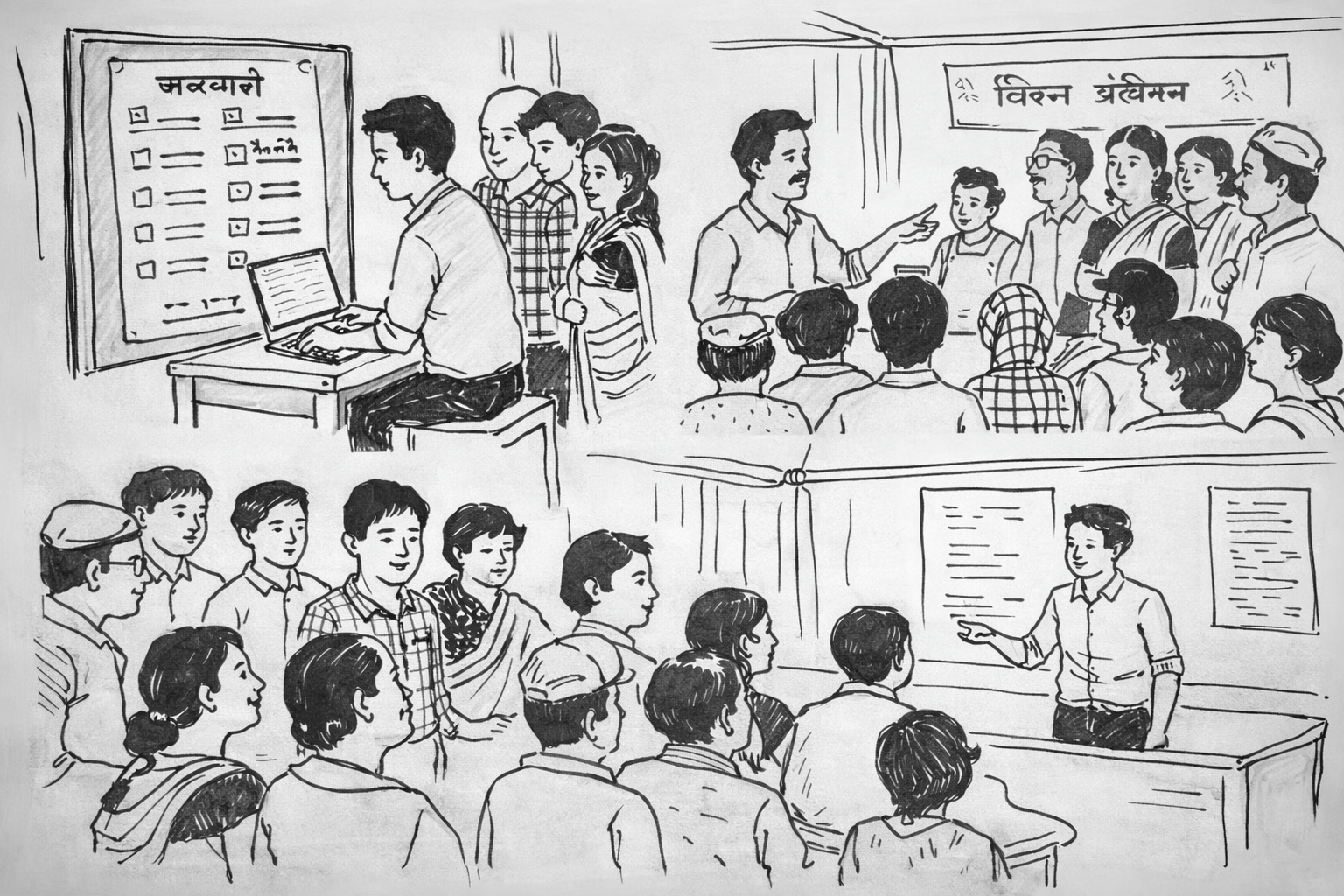
Story: Sumit, a 23-year-old postgraduate student, noticed a crowd of villagers gathered around the Panchayat notice board in his hometown. Upon approaching, he realised that many peoples were struggling to understand the complex eligibility criteria for a newly launched government skill-development scheme. Sensing their confusion, Sumit took the initiative to simplify the information.
He spent the afternoon researching the scheme’s details on his laptop and then returned to the board. He pinned up a handwritten, easy-to-read chart in the local language, outlining the necessary documents and the application deadline. He also organised a small briefing in the community hall to explain how the vocational training could lead to local employment. Sumit assisted ten youngsters in filling out their digital applications using his own data connection.
Why it works: This is a perfect start to our 10 PPDT Pictures for SSB Interview list. It shows a candidate who spots a real-world problem and uses his education to help others without expecting a reward.
PPDT Picture 2: Facilitating Rural Literacy and Employment
(Note: Many candidates write the exact same story for similar pictures, but you should bring variety!)
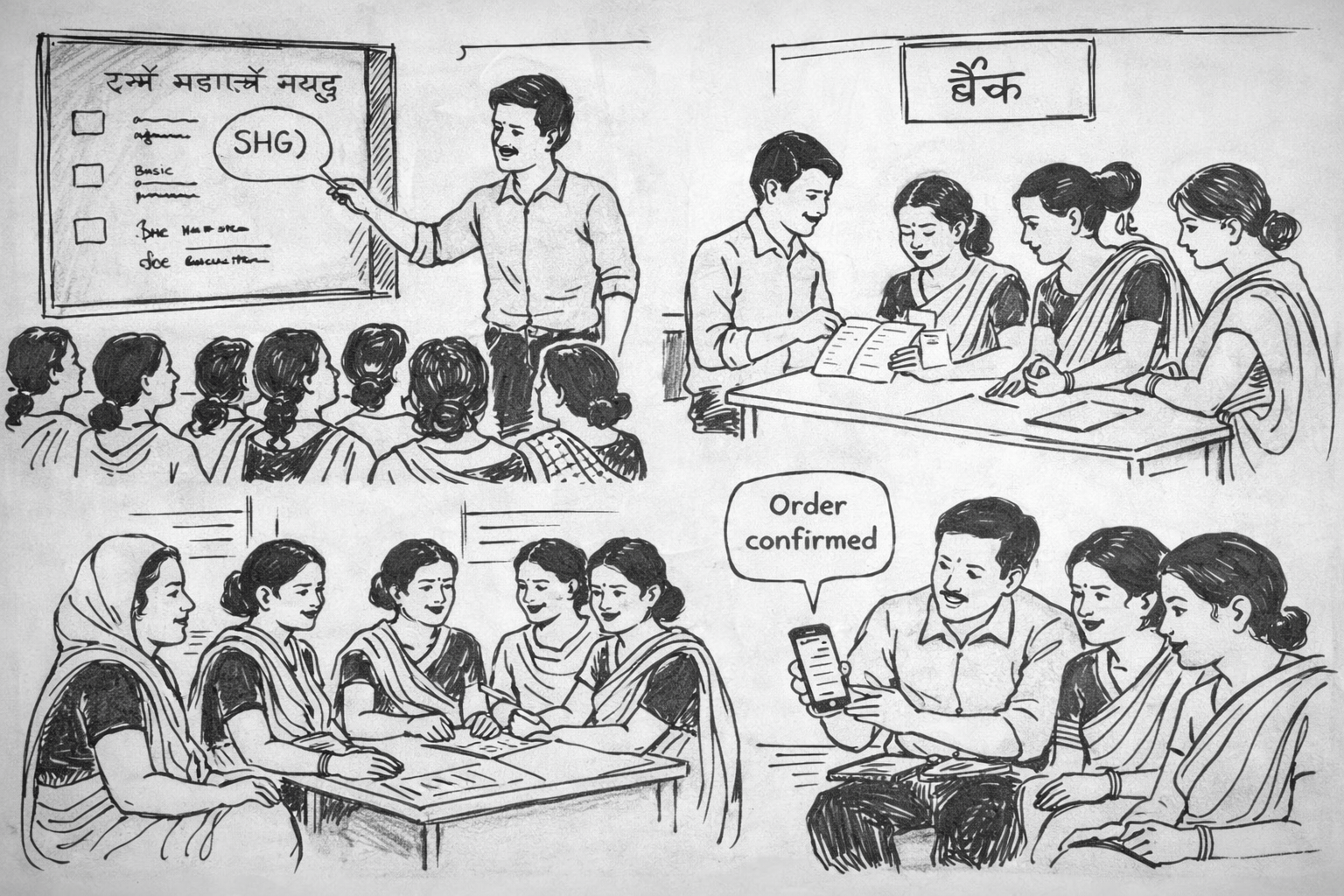
Story: Rahul was a 24-year-old software engineer working in Pune. During his Diwali vacation in his native village, he observed that many women who made beautiful traditional handicrafts were not getting proper prices because they only sold to local middlemen. They lacked basic financial literacy. Rahul decided to empower them.
He gathered a group of 15 women and started a 5-day evening workshop at the village school. He taught them basic calculations, how to open a bank account, and the concept of self-help groups (SHGs). He also helped them register their products on a government rural e-commerce portal using his smartphone. By the time he left, the women had formed an SHG, opened a joint bank account, and received their first direct online order, boosting their confidence and income.
Why it works: This PPDT pictures with stories example highlights empowerment. The hero transfers skills to others, ensuring a long-term positive impact.
PPDT Picture 3: Enhancing Village Connectivity
Before We Begin – How to Approach PPDT Like a Recommended Candidate
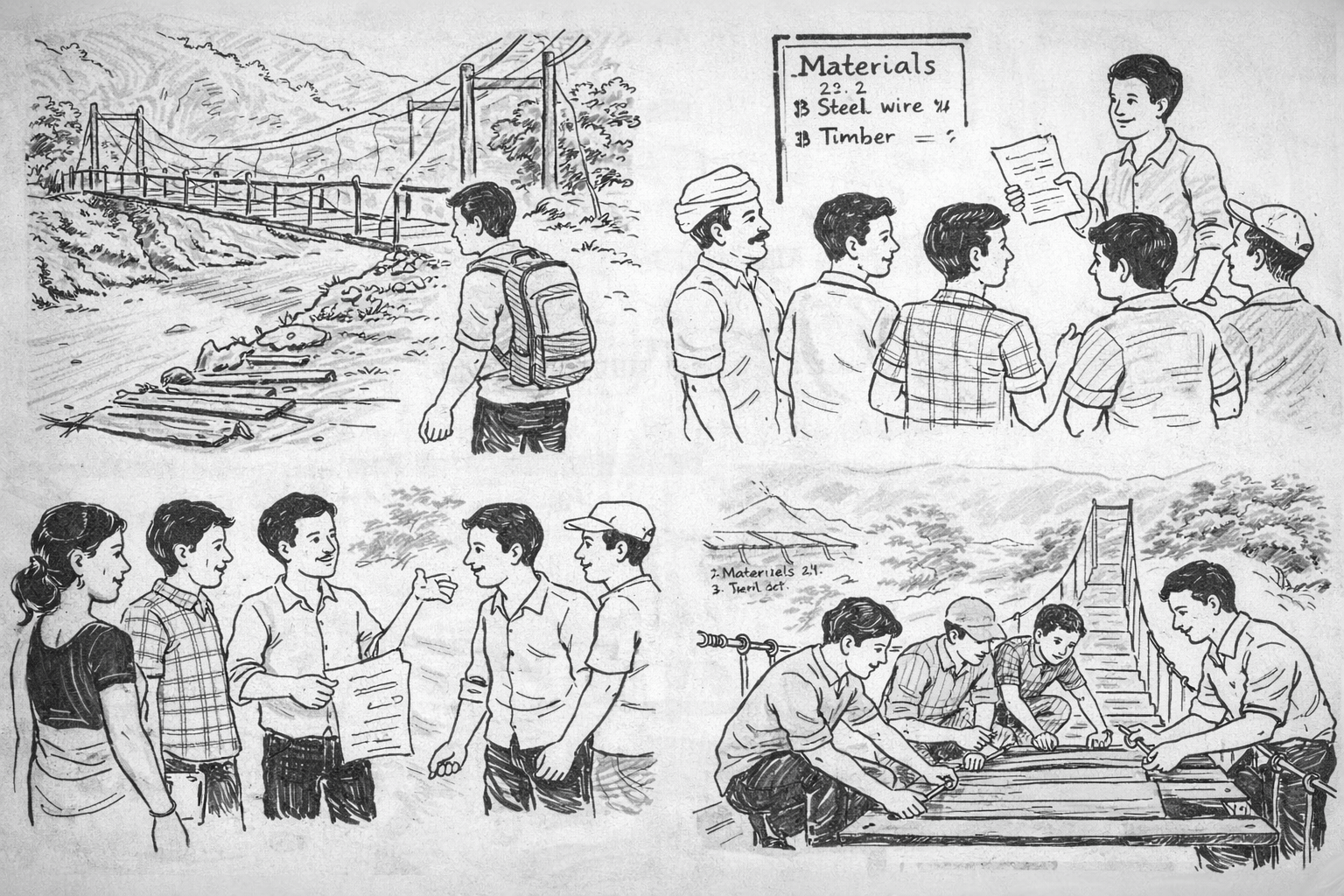
Story: Arjun, a 23-year-old Civil Engineering student, returned to his hilly hometown for his summer break. During a trek, he noticed the old suspension bridge over the local river, which was the only link between the village and the primary school, had developed loose cables and decaying wooden planks. Realising the danger it posed to daily commuters and children, Arjun decided to act immediately.
He conducted a basic safety audit and met the Village Pradhan. Using his technical knowledge, Arjun drafted a simple repair proposal and estimated the material requirements. He motivated the village youth to contribute voluntary labour (Shramdaan) while the Panchayat provided the funds for steel wires and treated timber. Under Arjun’s supervision, the group tightened the supports and replaced the worn-out planks within four days.
Why it works: In any 10 PPDT Pictures for SSB Interview collection, you need a story showing technical application and group leadership. Arjun uses his specific degree (Civil Engineering) to solve a physical problem.
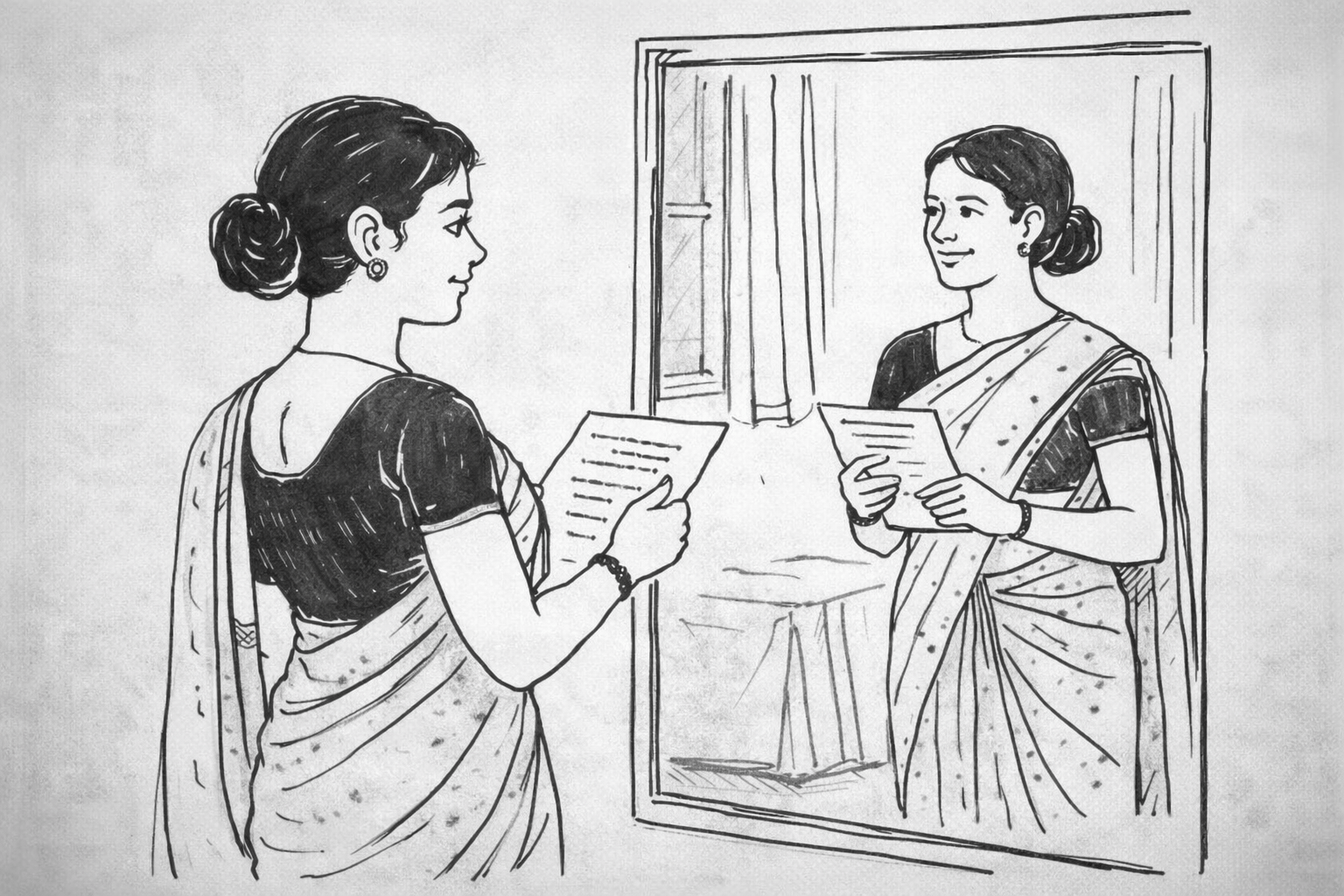
PPDT Picture 4: Preparing for a Convocation Speech
Story: Aditi, a 22-year-old engineering graduate, stood before the mirror in her room, draped in a formal saree. She had been selected as the valedictorian of her batch and was set to deliver the convocation speech later that morning. While looking at her reflection, she wasn’t just checking her appearance; she was mentally rehearsing her opening remarks and focusing on her body language to project maximum confidence.
Recognizing the responsibility of representing her peers, she had spent the previous week collecting feedback from classmates to include their shared experiences in her speech. She took a deep breath, practised her vocal modulation one last time, and ensured her notes were organized. She felt a great sense of pride and readiness to address the large gathering of faculty, parents, and students.
Why it works: Single-person pictures are tricky. Many candidates write sad stories. This story turns isolation into preparation and self-improvement.
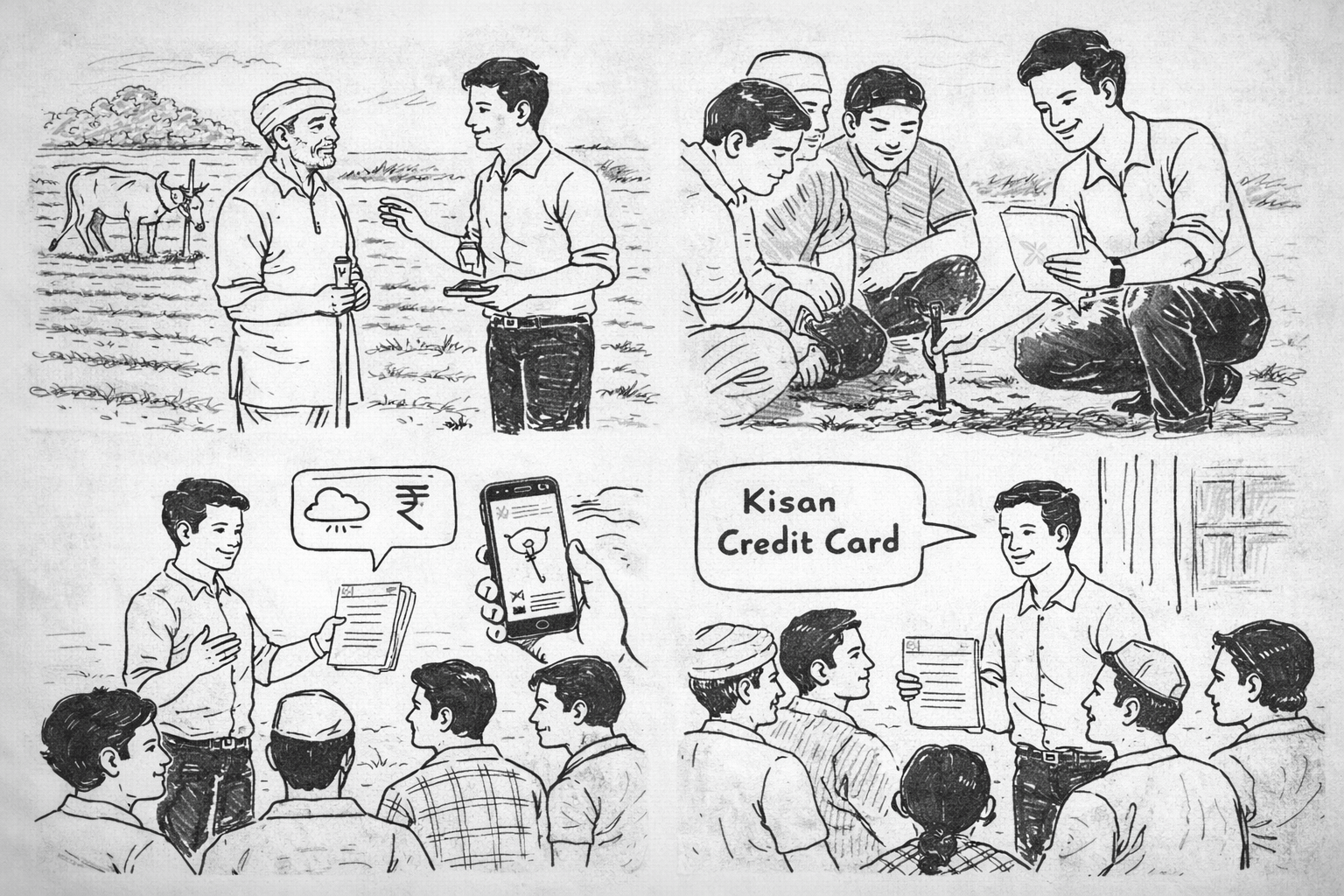
PPDT Picture 5: Modernising Village Farming
Story: Ravi was a young Agriculture graduate who returned to his village during the sowing season. While walking through the fields, he met his neighbour, Kaka, who was using traditional methods and struggling with very low crop yields. Ravi realised that many farmers were unaware of the latest soil-testing techniques and government-subsidised organic fertilisers.
He decided to bridge this gap. Ravi spent the week visiting different farms, explaining the benefits of crop rotation and balanced nutrient use in simple terms. He helped Kaka and five other farmers test their soil and showed them how to use a mobile app to track weather updates and market prices. He also organised a small meeting to help them apply for the Kisan Credit Card to avoid high-interest local loans.
Why it works: Halfway through our 10 PPDT Pictures for SSB Interview, we see a story about modernizing traditional setups. It proves the candidate is aware of current government schemes (Kisan Credit Card) which shows good general knowledge.
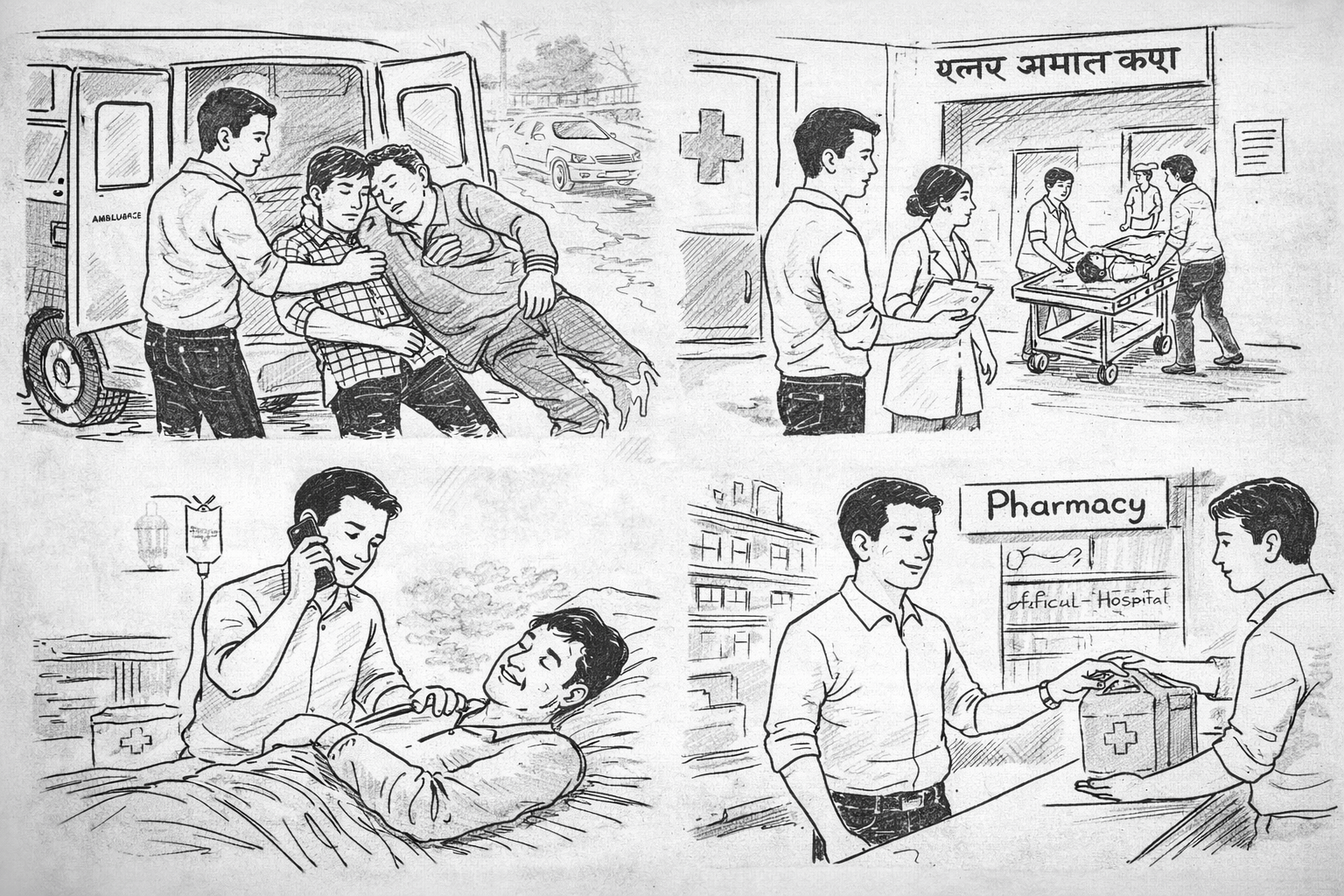
PPDT Picture 6: Timely Medical Assistance
Story: Rahul was returning home from work when he witnessed a road accident involving a middle-aged pedestrian who slipped on the wet road. Without wasting any time, he used a passerby’s help to safely move the injured man into an ambulance and accompanied him to the nearby Civil Hospital.
Upon reaching, Rahul quickly coordinated with the duty nurse to get a stretcher and shifted the patient to the emergency ward. While the doctors began the initial treatment, Rahul checked the man’s pockets, found his mobile phone, and informed his family about the situation. He also completed the necessary admission formalities and arranged for the required medicines from the hospital pharmacy to ensure no time was lost.
Why it works: This is vital for your PPDT image practice – SSB interview preparation. In emergency pictures, do not write about chasing the culprit. The first duty of an officer is to save a life. Rahul does this perfectly.
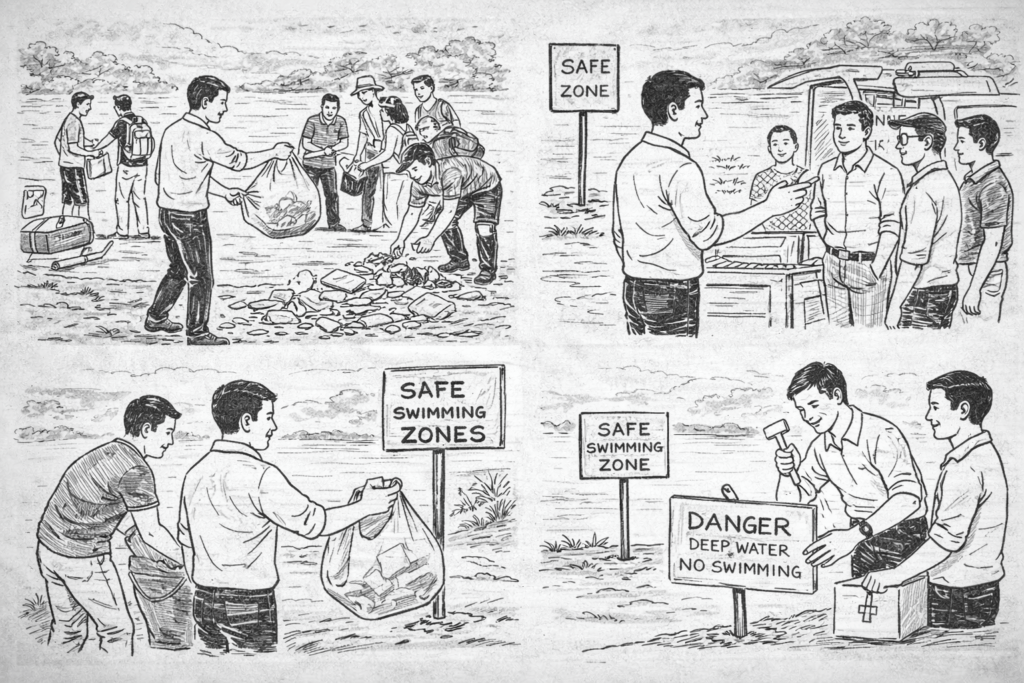
PPDT Picture 7: Organising a Cleanliness and Safety Drive
Story: Karan, a final-year college student, went for a weekend trip with his friends to a popular lakeside picnic spot near his town. While his friends were busy setting up the gear, Karan noticed that the increasing number of tourists had led to a significant amount of plastic waste near the water’s edge. He also realised there were no clear safety markers for deep-water zones, which could be dangerous for children playing nearby.
Karan decided to take charge. He gathered his friends and other willing tourists for a quick “15-minute clean-up,” collecting the scattered waste in bags. He then met with the local van operators and vendors to suggest placing a few simple wooden signboards indicating “Safe Swimming Zones.” He used his own stationery to create temporary warning signs until the local panchayat could install permanent ones.
Why it works: This entry in our 10 PPDT Pictures for SSB Interview shows civic sense. It takes a casual picnic and turns it into an act of responsibility.
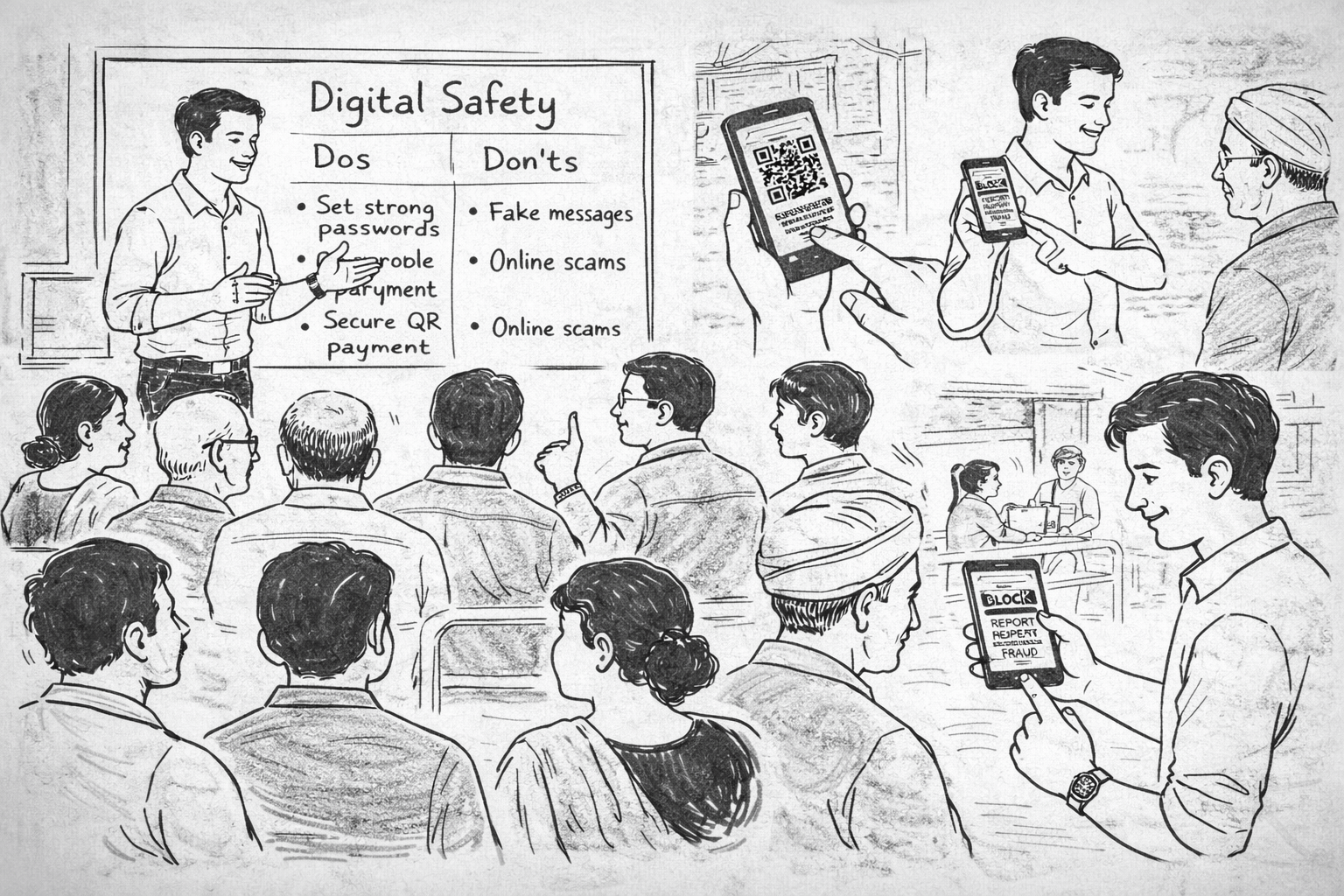
PPDT Picture 8: Conducting a Digital Literacy Workshop
Story: Aman, a final-year IT student, noticed that many elderly residents and small shopkeepers in his neighbourhood were struggling to use digital payment apps and online banking safely. Fearing they might fall victim to online fraud, Aman decided to organise a “Digital Safety” workshop at the local community centre.
He prepared a simple presentation using real-life examples of “dos and don’ts.” During the session, Aman encouraged the participants to ask questions, no matter how basic. He patiently explained how to set strong passwords, identify fake messages, and use QR codes for secure transactions. He also demonstrated how to use the “block” and “report” features on their smartphones.
Why it works: Excellent use of modern context. It shows patience, empathy towards elders, and subject matter expertise.
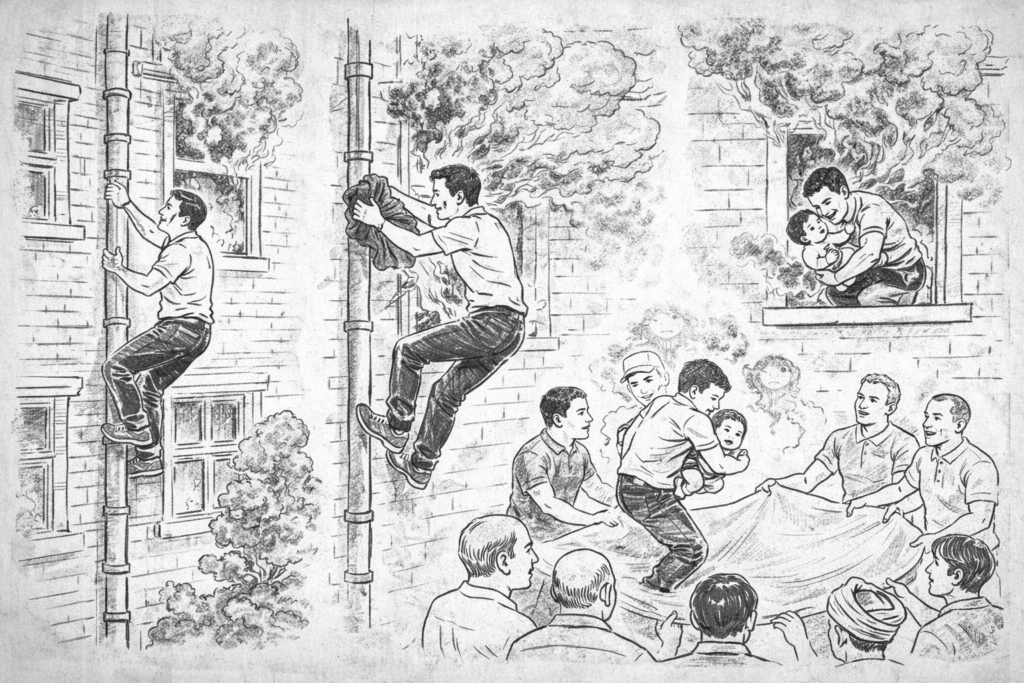
PPDT Picture 9: Timely Rescue Mission
Story: Sameer, a college athlete known for his agility, was walking through his neighbourhood when he heard a frantic cry for help. He looked up to see thick smoke billowing from a first-floor kitchen window. A small child was trapped inside, and the main wooden door was jammed from the inside due to the heat. Realising that waiting for the fire brigade might take too long, Sameer decided to use his rock-climbing skills.
He quickly assessed the building’s exterior and spotted a sturdy drainage pipe and a window ledge. Taking a deep breath, he gripped the pipe and hauled himself up. With great focus and physical strength, he reached the window, broke the glass carefully with his jacket, and entered the room. He safely lifted the child and handed him down to the neighbours who had gathered with a sturdy blanket below.
Why it works: The 9th picture in our 10 PPDT Pictures for SSB Interview series demands courage. Sameer assesses the risk, uses his specific athletic skills, and acts bravely. This is exactly what military psychologists look for
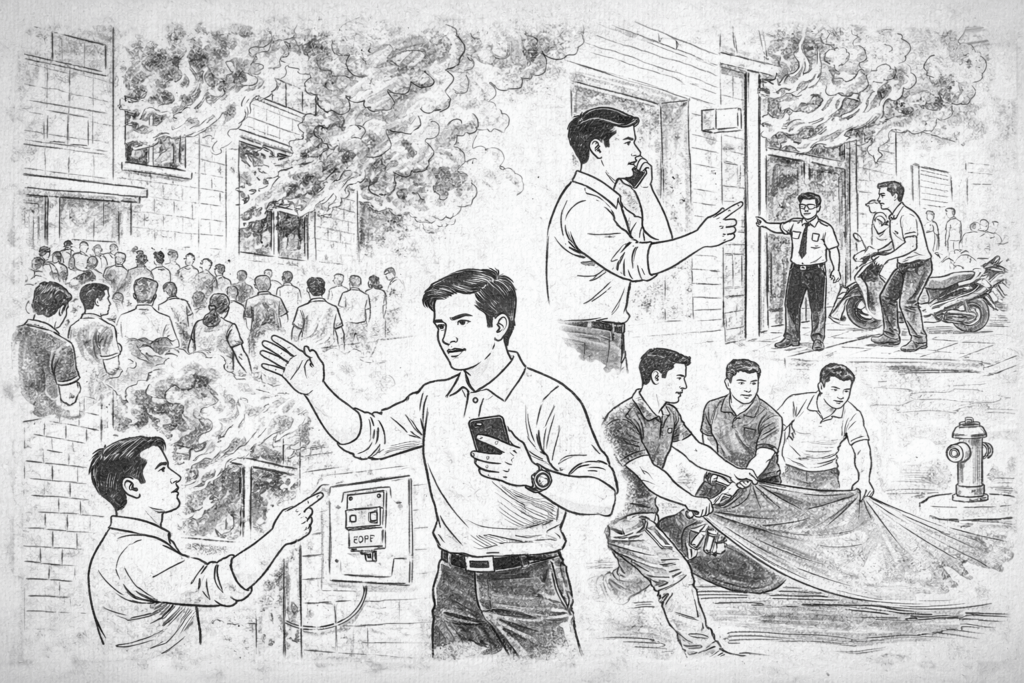
PPDT Picture 10: Coordinating a Fire Emergency Response
Story: Vikram, a young bank employee, was walking towards the market when he noticed thick smoke and flames erupting from the second floor of a commercial building. While the crowd stood in shock and panic, Vikram immediately took charge.
He first called the fire department and provided the exact location and severity of the fire. Understanding the danger of a stampede, he began directing the gathered people to move back to a safe distance to clear the path for emergency vehicles. He spotted the building’s security guard and instructed him to cut off the main power supply and ensure no one entered the elevators. Vikram then located the nearest fire hydrant and guided two other young men to help him keep the building’s entrance clear of parked scooters that were blocking access.
Why it works: He does not jump into the fire blindly. He organizes, controls the crowd, and manages logistics. True leadership
How Cadets Defence Academy Helps You Master PPDT
At Cadets Defence Academy (located right here in beautiful Dehradun), we do not just give you theory. We believe in rigorous, practical training. If you are preparing for your upcoming attempt, our PPDT image practice – SSB interview preparation is unmatched. PPDT is practised daily in our campus with:
- Real SSB-level pictures: We use original, high-quality hazy pictures to simulate the real test environment.
- Personal feedback: Our ex-SSB assessors give you individual feedback on your perception and narration skills.
- Group discussion techniques: We teach you how to enter a noisy GD and make your point heard respectfully.
- Confidence-building: Daily narration drills to remove stage fear and grammatical hesitations.
Conclusion
So, guys, mastering these 10 PPDT Pictures for SSB Interview will give you a massive advantage. Remember, PPDT is not an exercise where one has to narrate the most outstanding or most innovative story; it is all about demonstrating one’s clear thinking, optimistic approach, and sheer confidence. One has to remain composed, analyse the picture, and develop a practical story based on a proper beginning, action, and consequence, while narrating it with confidence and being respectful towards others in the discussion.
If you practice PPDT regularly and follow proper guidance, PPDT can easily become one of your major strengths in an SSB interview. The SSB does not look for perfect narrators or Oscar-winning writers. It looks forward to responsible, active, and well-rounded officers for the future of our Armed Forces.
Start your practice today, stay positive, and I will see you at Cadets Defence Academy soon! Jai Hind
FOR MORE BLOGS:
- 15 Officer Like Qualities (OLQs): Your SSB Success Guide
- Career Opportunities in the Indian Armed Forces After Graduation
- The Real Heroes: Opportunities for Women in the Indian Armed Forces (2026 Update)