Every year, thousands of NDA and CDS aspirants lose their rank not because of Maths or General Knowledge, but because of English. It’s the one section students postpone the most and understand the least. If you have ever asked yourself “why do I keep making the same mistakes in English no matter how much I study,” this guide on how to improve English for NDA/CDS is written for you.
At Cadets Defence Academy, our founder and faculty of English, Sanjeev Thakur Sir, has spent over a decade teaching English specifically to defence aspirants in Dehradun. In this detailed guide, we break down his complete vocabulary and grammar framework, step by step, so you can apply it starting today — no matter which stage of preparation you are at.
Why Does English Deserve Equal Priority in NDA/CDS Preparation?
Most students treat English as a “scoring section” they will revise later. This is one of the biggest preparation mistakes we see at CDA. Here’s why English deserves the same daily attention as Maths and GK:
- It carries substantial marks in both the NDA English paper and the CDS English exam pattern, and a weak score here can pull down an otherwise strong overall rank.
- Unlike Maths, English rewards consistency over cramming — a word learned wrong today will cost you marks even six months later if it isn’t corrected.
- Your performance in English directly reflects in your SSB interview, Lecturette, Group Discussion, and Personal Interview. Officers are expected to communicate with clarity, and the selection board notices this from the very first conversation.
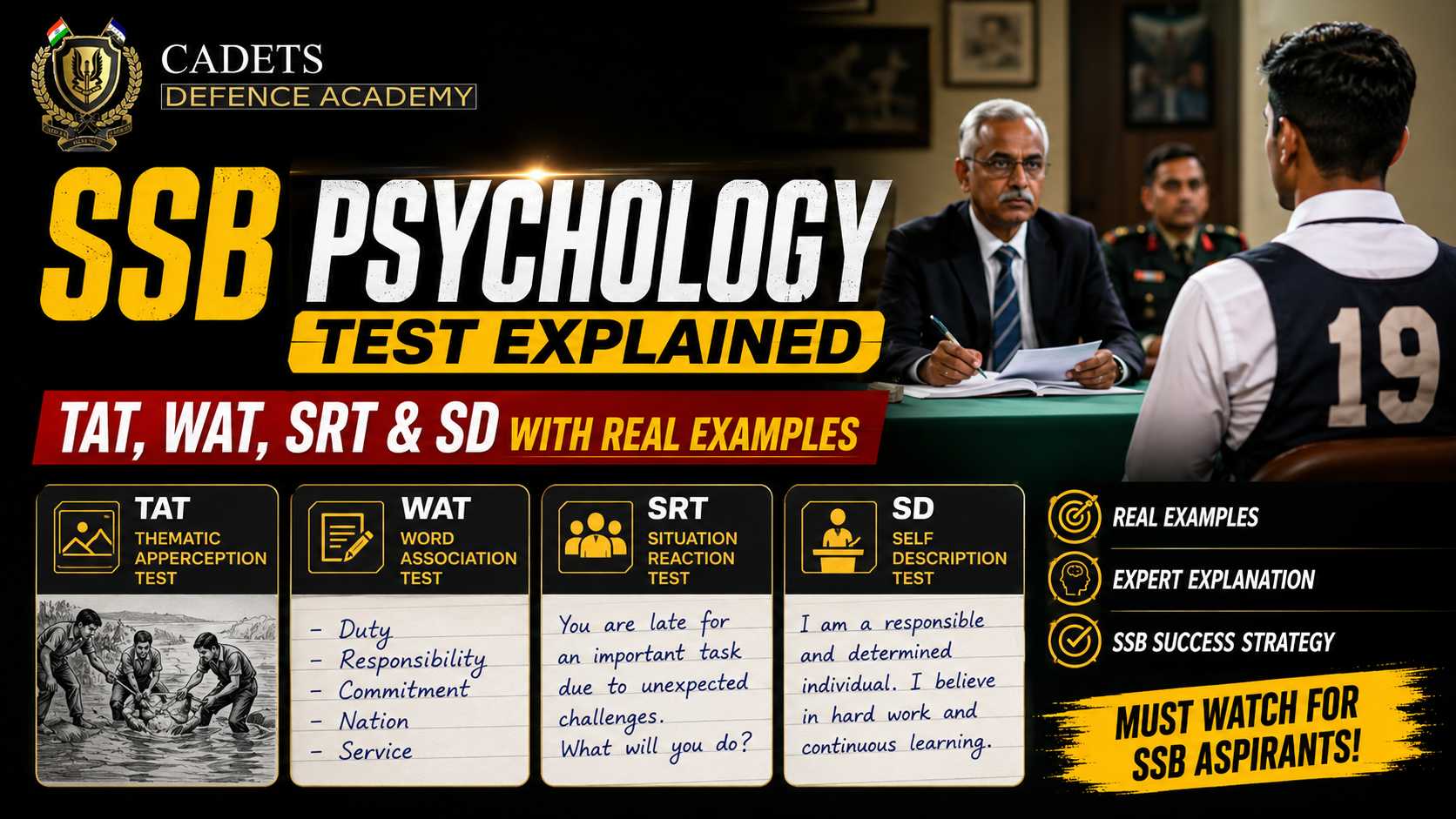
- Comprehension and error-detection skills built for the written paper also improve how confidently you write your Personal Interview Officer forms and psychological test responses (TAT, WAT, SD).
In short, English is not an isolated subject — it is a skill that supports your entire defence exam journey.
NDA vs CDS English Exam Pattern: A Side-by-Side Comparison
Before building any strategy, you need absolute clarity on what each exam actually tests. Here is a simple comparison table our students use as a quick reference:
| Feature |
NDA English Paper |
CDS English Paper |
| Total Marks |
200 |
100 |
| Question Type |
Objective (MCQ) |
Objective (MCQ) |
| Key Areas Tested |
Grammar, vocabulary, comprehension, cohesion, ordering of sentences |
Error detection, sentence improvement, synonyms, antonyms, comprehension passages |
| Difficulty Level |
Moderate, tests foundational clarity |
Slightly higher, tests application-based grammar |
| Negative Marking |
Yes |
Yes |
| Weightage in Total Score |
Roughly 1/3rd of Maths + GAT combined |
Roughly 1/3rd of the written paper |
| Best Preparation Focus |
Root-word vocabulary + basic grammar accuracy |
Error spotting + sentence-level grammar precision |
You can always verify the latest official weightage and pattern directly from the UPSC official website before finalising your preparation strategy, since exam patterns are reviewed periodically.
Who Is Sanjeev Thakur Sir, and What Makes His Framework Different?
Sanjeev Thakur Sir is the founder of Cadets Defence Academy and has personally guided English preparation for hundreds of NDA and CDS aspirants in Dehradun. What sets his teaching apart is that the framework isn’t borrowed from generic competitive-exam material — it is built entirely around the recurring mistakes Indian defence aspirants make:
- Memorising word meanings without understanding root structures, causing them to forget words within days.
- Learning grammar rules by heart instead of learning to apply them inside real sentences.
- Practising comprehension passages without any time discipline, which fails them badly on actual exam day.
- Ignoring spoken English entirely, even though it directly affects SSB performance later.
His framework fixes each of these gaps through three connected pillars: vocabulary through root words, grammar through application, and comprehension through timed, disciplined practice.
How to Build a Strong Vocabulary for NDA/CDS? (The Root-Word Method)
“How do I remember vocabulary for CDS and NDA without forgetting it in a week?” This is the single most common question we hear in our classrooms. Random word lists don’t work because the brain forgets isolated information quickly. Sanjeev Thakur Sir’s vocabulary framework solves this using root words, which unlock multiple related words from a single concept.
Step-by-Step Vocabulary Framework
- Learn one root word every day. For example, the root “bene” (meaning good) instantly connects you to benefit, benevolent, benefactor, and beneficiary.
- Prioritise high-frequency exam words that repeat across NDA English previous year questions and CDS papers, instead of rare words that rarely appear.
- Use every new word in a sentence immediately. This single habit converts short-term memory into long-term recall.
- Pair every word with its synonym and antonym, since both NDA and CDS test vocabulary in this exact format.
- Revise using spaced repetition — review Day 1 words again on Day 3, Day 7, and Day 21. This is what actually moves vocabulary into permanent memory.
Sample Root-Word Table (Start Here)
| Root Word | Meaning | Connected Words |
| Bene | Good | Benefit, Benevolent, Benefactor |
| Mal | Bad | Malpractice, Malicious, Malnutrition |
| Dict | Say/Speak | Predict, Contradict, Verdict |
| Port | Carry | Transport, Portable, Export |
| Spec | See/Look | Spectator, Inspect, Retrospect |
| Vac | Empty | Vacant, Evacuate, Vacuum |
Following this vocabulary tricks for NDA exam approach consistently for three months typically builds a working word bank of 800–1000 high-utility words, which comfortably covers most vocabulary-based questions across both papers.
How to Master Grammar for NDA/CDS English?
Grammar is where aspirants lose the most avoidable marks, simply because they were taught rules without ever applying them. Sanjeev Thakur Sir’s grammar framework for competitive exams is built entirely on application, not memorisation.
The Four-Step Grammar Approach
Step 1 — Master the foundation first. Before attempting error spotting tricks for CDS, be completely confident in the basics: parts of speech for defence exams — nouns, pronouns, verbs, adjectives, prepositions, and conjunctions. Skipping this step is the number one reason grammar preparation collapses later under exam pressure.
Step 2 — Focus specifically on tense and voice. A large share of error-detection questions in both exams comes from incorrect tense usage and active-passive voice errors. Dedicating focused practice to just these two areas alone noticeably raises your grammar score.
Step 3 — Practice sentence improvement daily, not occasionally. Instead of solving grammar questions in isolation, pick one comprehension passage every day and rewrite the incorrect sentences correctly. This builds the exact instinct examiners are testing for in sentence improvement for CDS English.
Step 4 — Maintain an error log. Keep a small notebook of mistakes you repeat across mock tests. Most students repeat the same 15–20 errors throughout their preparation. Fixing these alone can lift your grammar score significantly within a few weeks.
Common Grammar Traps Aspirants Fall Into
| Grammar Area | Common Mistake | Sanjeev Thakur Sir’s Fix |
| Subject-Verb Agreement | Ignoring singular/plural mismatch with collective nouns | Practice with 20 sentences daily using collective nouns |
| Tense Consistency | Mixing past and present tense in the same sentence | Rewrite one paragraph daily, correcting tense shifts |
| Prepositions | Direct translation from Hindi (“discuss about”) | Maintain a list of commonly misused prepositions |
| Active-Passive Voice | Confusing subject-object placement | Convert 10 sentences daily between active and passive |
| Articles (a/an/the) | Skipping or misplacing articles | Read aloud daily to build a natural “sound check” instinct |
What Is the Best Weekly Study Plan to Improve English?
A simple, sustainable routine beats an overloaded one that burns out after two weeks. Based on Sanjeev Thakur Sir’s classroom structure at CDA, here is a realistic weekly plan:
| Day |
Focus Area |
Time Required |
| Monday |
Root-word vocabulary + revision of Day 1 words |
40 minutes |
| Tuesday |
Grammar rule application (one topic only) |
40 minutes |
| Wednesday |
Comprehension passage with strict time limit |
40 minutes |
| Thursday |
Error-log revision + sentence improvement practice |
40 minutes |
| Friday |
Vocabulary spaced repetition + new root words |
40 minutes |
| Saturday |
Full mock test (previous year NDA/CDS English paper) |
60 minutes |
| Sunday |
Review mistakes from Saturday’s mock test |
30 minutes |
This structured, 70-minutes-a-day approach, followed consistently for 8–10 weeks before your exam, is realistic even alongside Maths and GK preparation — and it is exactly the discipline our students follow in their NDA Foundation Course classrooms.
Which Resources Should You Combine With This Framework?
The framework works best when paired with the right supporting resources:
- NDA and CDS previous year question papers — these reveal recurring vocabulary and grammar patterns examiners repeat year after year.
- A standard grammar reference book for rule clarity, used alongside the application-based practice above.
- Purposeful newspaper reading — underline unfamiliar words daily and look them up the same evening, rather than reading passively.
- Regular timed mock tests to build accuracy under real exam pressure, not just untimed practice.
For the latest official exam pattern and notification details, always cross-check with UPSC, and for training-related updates once you clear the exam, refer to the NDA official website.
How Does Strong English Help Beyond the Written Exam?
Many aspirants don’t realise that English preparation pays off long after the written paper is over. A candidate who has genuinely worked on vocabulary and grammar communicates more clearly during:
- Lecturette and Group Discussion at the SSB, where confident, grammatically correct speech creates a strong first impression.
- TAT and WAT psychological tests, where sentence construction speed and clarity matter as much as content.
- Personal Interview, where officers assess how clearly you express your thoughts under pressure.
This is exactly why we integrate English training into our SSB interview preparation at CDA, rather than treating it as a separate, standalone subject.
How Can Cadets Defence Academy Help You Apply This Framework?
Reading about a framework is only the starting point — applying it consistently under expert guidance is what actually moves your score. At Cadets Defence Academy, Sanjeev Thakur Sir personally teaches English as part of our NDA Coaching programs and CDS coaching batches, using the exact root-word and application-based grammar method outlined above.
If you’re also mapping out your overall exam timeline, our detailed guides on NDA exam eligibility and dates and CDS 2026 syllabus and exam pattern will help you plan English preparation alongside Maths and GK, rather than leaving it for the last month.
Making an Informed Choice
Choosing between the X and Y Groups isn’t just a matter of picking a job title—it’s about aligning with a lifestyle and set of responsibilities that fit your personal and professional goals. The Difference Between Air Force X Group and Y Group isn’t about one being better than the other but about finding where you can contribute best. Both groups offer a unique opportunity to serve the nation in ways that matter.
Take the Next Step With Sanjeev Thakur Sir's English Framework
Knowing the framework is one thing — applying it consistently under expert correction is what actually moves your score. If you’re serious about clearing the English section in your next NDA or CDS attempt, don’t prepare alone.
Your English score doesn’t have to hold your rank back. Start with the right framework, guided by the right mentor.
Frequently Asked Questions