Short answer: After four years, 25% of Agniveers are still picked for regular service on merit. On 4 November 2026 the Union Cabinet approved a second engagement of two more years for the other 75%, if they are willing. After those six years, all of them can be enrolled as regular soldiers, subject to their willingness and the selection criteria (PIB, 4 Nov 2026).
For four years, every parent who sat in our office in Dehradun asked the same question before the fee: “Sir, chaar saal ke baad kya hoga?” What happens after four years? We never had a full answer. Most boys and girls who joined for Agniveer knew that three out of four would come home at 21 or 22, with a Seva Nidhi cheque and a lot of uncertainty.
That answer has now changed. Here is what the Cabinet actually decided, what is still unclear, and what it means if you are preparing for Agniveervayu, Navy SSR/MR or the Army Agniveer exam right now.
Table of Contents
Key takeaways
25% of each batch still gets regular service after four years, on merit. That part has not changed.
The other 75% will be offered another two-year engagement if they want it. It is optional.
After those two years, all of them can be enrolled as regular soldiers, but only if they are willing and meet the selection criteria.
The second engagement will have higher pay, an enhanced Seva Nidhi package and seniority benefits. The exact Seva Nidhi amount is not public yet.
The CDS has been reported as saying pay in the two extra years will be about ₹43,500 and ₹47,500 a month. The PIB release does not give these figures.
The government says the Agnipath scheme will continue, so the 2027 intakes still join as Agniveers.
What exactly did the Cabinet decide on 4 November 2026?
The Cabinet kept the 25% merit route and added a second, optional two-year engagement for the remaining 75% of Agniveers. The Ministry of Defence release, posted at 4:14 PM on 4 November 2026, says this was approved “on the recommendations of the Indian Defence Forces” after an assessment of how Agniveers performed in their first four years (PIB release 2332524).
In plain words, the release makes four points:
25% regular, as before. Based on merit, 25% of Agniveers will be offered regular employment.
A second engagement for the rest. The remaining 75% will be offered another engagement of two years, based on their willingness.
A route to regular service. After that two-year period, all Agniveers will be offered enrolment as regular soldiers, subject to their willingness and meeting the selection criteria.
Better terms. The second engagement will have higher remuneration, an enhanced Seva Nidhi package and seniority benefits.
The Chief of Defence Staff, General N.S. Raja Subramani, announced the decision the same day (The Week, 4 Nov 2026). Defence Minister Rajnath Singh called it a “Second Tour of Duty” and, speaking to air warriors at Bagdogra on 7 November, a Diwali gift for Agniveers (ThePrint/PTI, 7 Nov 2026).
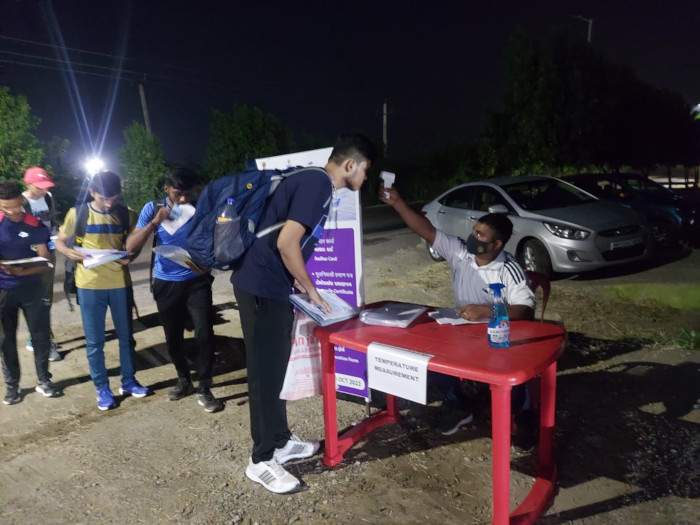
The first Navy Agniveer (SSR and MR) recruitment drive at INS Valsura, Jamnagar, 10–14 October 2022. Photo: Indian Navy, GODL-India, via Wikimedia Commons.
What was the rule before, and what changes now?
Before this decision, the 75% who were not selected simply left after four years. Now they get a choice. The table puts the two side by side.
4 years, plus an optional 2-year second engagement for the 75%
Regular service after 4 years
Up to 25% of each batch, on merit
25% on merit (unchanged)
The other 75%
Exit with Seva Nidhi
Can take 2 more years if willing
After 6 years
Not applicable
All can be offered enrolment as regular soldiers, if willing and they meet the selection criteria
Pay in years 5 and 6
Not applicable
Higher remuneration; about ₹43,500 and ₹47,500 a month as reported from the CDS (not yet in the PIB release)
Seva Nidhi
About ₹11.71 lakh plus interest, tax-free
Enhanced package for the second engagement; amount not yet published
Seniority
Not mentioned in the 2022 release
Seniority benefits promised; details awaited
One word in the release matters a lot: willingness. Nobody will be forced to stay. The other word to watch is selection criteria. The release does not publish them yet, so “all Agniveers” means all who want it and who clear whatever standards the services set.
How much will an Agniveer earn, including the two extra years?
Years 1 to 4 are fixed by the 2022 scheme. Years 5 and 6 are only reported figures so far. Under the original rules, 30% of the monthly package goes into the Agniveer Corpus Fund and the government adds the same amount (PIB, 14 Jun 2022).
Years 1–4: PIB, 14 Jun 2022. *Years 5–6: figures attributed to the CDS by Open Magazine; wait for the official order before you plan around them.
Year
Monthly package
In hand (70%)
Your corpus contribution (30%)
Government contribution
1st year
₹30,000
₹21,000
₹9,000
₹9,000
2nd year
₹33,000
₹23,100
₹9,900
₹9,900
3rd year
₹36,500
₹25,580
₹10,950
₹10,950
4th year
₹40,000
₹28,000
₹12,000
₹12,000
5th year (second engagement)
About ₹43,500*
Not announced
Not announced
Not announced
6th year (second engagement)
About ₹47,500*
Not announced
Not announced
Not announced
Risk and hardship allowances, where they apply, come on top of this package. Life insurance cover of ₹48 lakh, without any contribution from you, applies during the engagement under the 2022 terms.
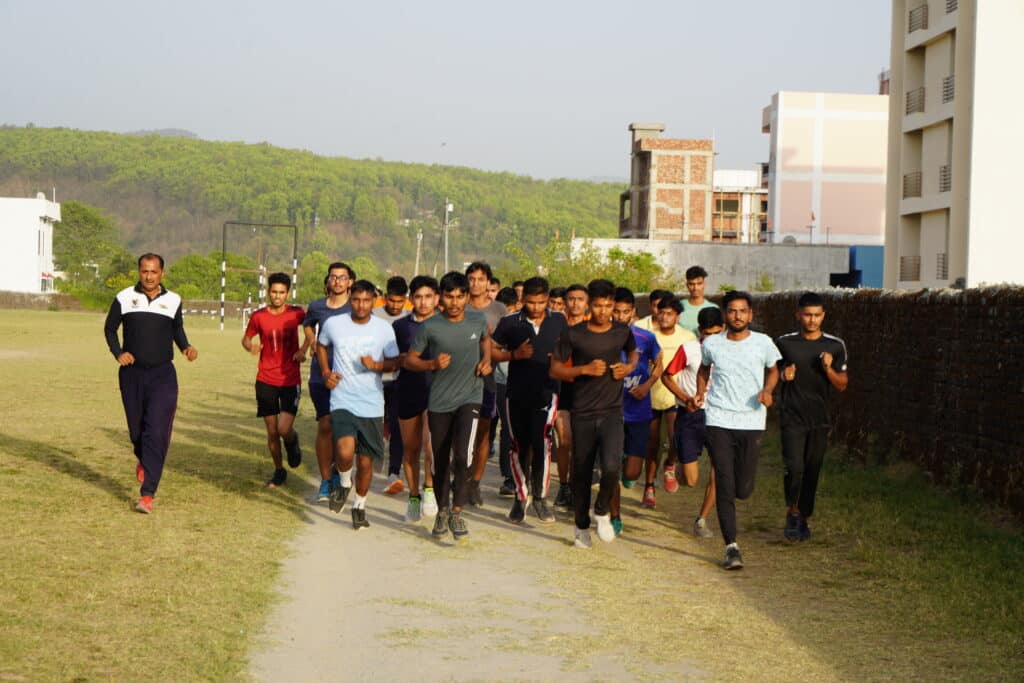
Morning PT for our Agniveer and NDA batches in Dehradun. Photo: Cadets Defence Academy.
What happens to the Seva Nidhi now?
The Seva Nidhi is the one-time, tax-free amount an Agniveer gets when the engagement ends. Under the 2022 scheme it is your 30% contribution plus an equal government contribution, about ₹5.02 lakh each, or about ₹11.71 lakh with interest. There is no gratuity or pension for the four-year engagement (PIB, 14 Jun 2022).
For the second engagement, the November 2026 release only says there will be an “enhanced Seva Nidhi package”. It does not say:
whether the four-year Seva Nidhi is paid at the end of year four or held until the end of year six;
how much extra the second engagement adds; or
how the amount is handled if you are enrolled as a regular soldier after year six.
We will update this page when the services issue their orders. Until then, please do not trust any exact “new Seva Nidhi” figure on YouTube or WhatsApp. It is a guess.
Who is covered by the extension?
The release covers “the remaining 75% Agniveers”, those not picked for regular service on merit. Coverage so far focuses on the first batch, about 18,300 Agniveers who joined in late 2022 and were due to leave by the end of 2026 (ThePrint/PTI). The release also says the Agnipath scheme “shall continue”, so the second engagement reads as part of the scheme going forward, not a one-time favour.
What is not yet clear:
the exact selection criteria for the second engagement and for regular enrolment after it;
whether the Army, Navy and Air Force will each set their own process and timeline; and
how and when an Agniveer must say they are willing.
The General Bipin Rawat rolling trophy, given to the woman Agniveer trainee who stands first in the overall order of merit, 2023. Photo: Press Information Bureau, GODL-India, via Wikimedia Commons.
What should you do if you are applying for Agniveer now?
If you are 17 or 18 and preparing for Agniveervayu, Navy SSR/MR or the Army Agniveer exam, this decision makes the job a longer, steadier career. It does not make the exam any easier. Here is how we are advising our own students:
Prepare as hard as before. Selection into Agnipath has not changed. You still clear the written test, the physical test and the medical.
Treat the first four years as a long interview. Both the 25% merit list and the later selection criteria depend on your performance. Discipline, fitness and trade skill will count every single year.
Keep studying. Agniveers are encouraged to improve their education during service, and a better education helps both for the regular cadre and for any civil job.
Talk to your family about six years, not four. If you take the second engagement, you will be about 23 to 27 when it ends, depending on your joining age (17.5 to 21).
Read only official notices. Use agnipathvayu.cdac.in for the Air Force, joinindiannavy.gov.in for the Navy, joinindianarmy.nic.in for the Army, and pib.gov.in for policy changes.
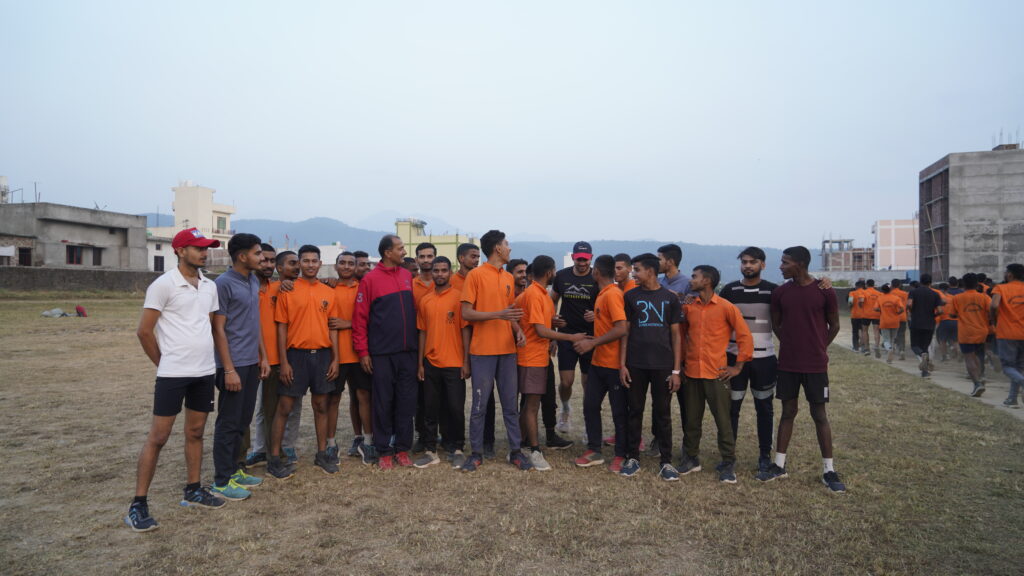
Students line up before running practice at our ground in Dehradun. Photo: Cadets Defence Academy.
Even with this decision, some Agniveers will choose to leave after four years. For them, the strongest option so far is the BSF. In December 2025 the Home Ministry raised the ex-Agniveer quota in BSF Constable (General Duty) recruitment from 10% to 50%. The first batch gets up to five years of upper age relaxation, later batches get three years, and ex-Agniveers are exempt from the Physical Standard Test and the Physical Efficiency Test (News on AIR, 21 Dec 2025).
Reports on quotas in the other Central Armed Police Forces differ by force, so please check the current recruitment rules in each notification before you count on a number.
Key dates at a glance
Date
What happened
14 June 2022
Cabinet approves the Agnipath scheme: 4-year engagement, up to 25% retained, Seva Nidhi on exit (PIB)
Late 2022
First Agniveer batches begin training
18–21 December 2025
BSF Constable (GD) quota for ex-Agniveers raised to 50% (News on AIR)
4 November 2026
Cabinet approves a 2-year second engagement for the remaining 75% and a path to regular enrolment (PIB)
7 November 2026
Rajnath Singh calls it a “Diwali gift” at Bagdogra (ThePrint/PTI)
Mid-Nov to 31 Dec 2026
First batch was due to complete four years; service-wise release and extension orders awaited
A few terms you will keep hearing
Agniveer: a soldier, sailor or airman enrolled under the Agnipath scheme. Agniveers form a separate rank under the Army, Navy or Air Force Act.
Agniveervayu: an Agniveer in the Indian Air Force, selected through the STAR exam at agnipathvayu.cdac.in.
Seva Nidhi: the one-time, income-tax-free payout at the end of the engagement, made of your corpus contribution, the government’s matching contribution and interest.
Regular cadre: permanent service. Under the 2022 terms, an Agniveer enrolled into the regular cadre serves at least 15 more years.
Second engagement: the new optional two-year period, which Rajnath Singh calls the “Second Tour of Duty”.
Our honest view
We have seen the faces of boys who cleared Agniveer in 2023 and then, a few weeks later, heard their village asking, “Sirf chaar saal?” That question took some of the pride out of a hard-won uniform. This decision gives that pride back. It tells a young Agniveer that if they keep performing, the door does not close at 22.
But be clear-eyed. The release promises a path, not a guarantee. The selection criteria are not public yet, and until each service issues its orders, nobody can tell you your exact pay, Seva Nidhi or chances. Prepare for the exam as if your seat depends on every mark, because it does. Then serve as if your next six years depend on every day, because now they do.
Preparing for Agniveervayu, Navy or Army Agniveer?
Share your details and our team at Cadets Defence Academy, Dehradun will call you about the written exam, the physical test and our Agniveer coaching batches.
Frequently Asked Questions
What happens to Agniveers after 4 years?
Based on merit, 25% are offered regular service. Under the Cabinet decision of 4 November 2026, the remaining 75% are offered a second engagement of two years if they are willing. After that, all of them can be enrolled as regular soldiers if they are willing and meet the selection criteria.
Is the 2-year Agniveer extension compulsory?
No. The Ministry of Defence release says the second engagement is offered based on willingness. An Agniveer who does not want it can leave after four years with the Seva Nidhi.
What is the Agniveer salary in the extension years?
The PIB release only says the remuneration will be higher. News reports quote the CDS as saying it will be about ₹43,500 a month in the first extra year and ₹47,500 in the second. Wait for the official order before you rely on these figures.
How much is the Agniveer Seva Nidhi?
Under the 2022 scheme it is about ₹11.71 lakh plus interest after four years, income-tax free: about ₹5.02 lakh from your contribution and the same from the government. The second engagement will carry an enhanced Seva Nidhi, but the amount is not yet published.
Do Agniveers get a pension?
There is no gratuity or pension for the four-year Agniveer engagement. Agniveers who are enrolled into the regular cadre are governed by the terms of service for regular soldiers, sailors and airmen.
Does the extension apply to new Agniveer batches?
The release says the Agnipath scheme will continue and that the remaining 75% of Agniveers will be offered the second engagement. Coverage so far focuses on the first batch, and service-wise orders are still awaited, so confirm the details for later batches when they are issued.
What is the ex-Agniveer quota in BSF?
Since December 2025, 50% of BSF Constable (General Duty) vacancies are reserved for ex-Agniveers. The first batch gets up to five years of age relaxation and later batches three years, and ex-Agniveers are exempt from the physical standard and physical efficiency tests.
Cabinet decision of 4 Nov 2026 explained: 25% regular, 75% get an optional 2-year second engagement, then a path to regular service. Pay and Seva Nidhi.
AFCAT 01/2027 form is open from 12 Nov to 11 Dec 2026. Step-by-step guide to the official application: documents, photo and signature sizes, fee and common mistakes.
The NDA syllabus from UPSC's latest notice: Maths units, English and GK sections, the official GK weightage, marks and negative marking, with a study order for NDA 1 2027.