
Complete NDA SSB PROCESS

Table of Contents

NDA SSB Process ,SSB Interview and Selection Process for NDA 2024

NDA SSB PROCESS – A Complete and comprehensive guide

Welcome to our guide on the NDA SSB process! Here, we’ll explain everything about the NDA SSB interview in simple terms. If you’re planning to join the NDA, this guide will help you understand what to expect. We’ll talk about each step of the NDA SSB process, like the interview and physical tests, and give you tips on how to get ready. Stick around to learn all about the NDA SSB process and how to succeed!

Introduction to the SSB Interview

  1. What is the SSB?

    NDA SSB, it stands for Service Selection Board. It’s a rigorous selection process conducted by the Indian Armed Forces to assess candidates for officer positions. For NDA aspirants, clearing the NDA SSB interview is crucial for entry into the prestigious National Defence Academy.

nda ssb interview coaching center in dehradun with cadets defence academy

Why is the SSB Important?

The SSB interview is the gateway to a fulfilling career in the armed forces. It evaluates not just your academic knowledge but also your personality, leadership qualities, and aptitude for military life. Success in the NDA SSB ensures a step closer to your dream of serving the nation.

Different Stages of the SSB Process

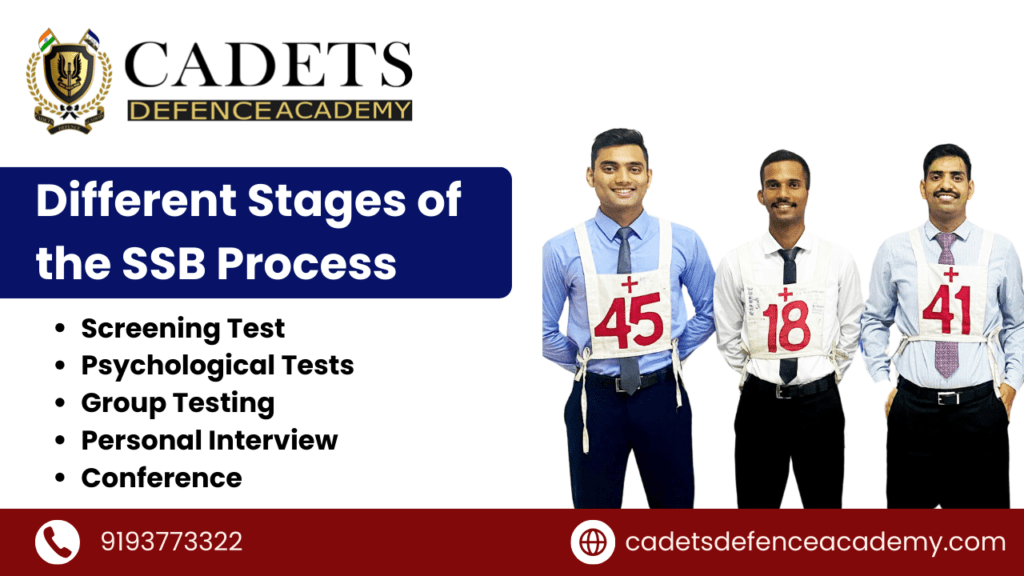
The NDA SSB process consists of multiple stages designed to comprehensively evaluate candidates. These stages include:

Different stage of the SSB Process coaching center in dehradun with cadets defence academy
  1. Screening Test: The initial stage where candidates undergo intelligence and aptitude tests.
  2. Psychological Tests: Assessments like the Thematic Apperception Test (TAT) and Word Association Test (WAT) to gauge personality traits.
  3. Group Testing: Activities such as group discussions, group planning exercises, and outdoor tasks to evaluate teamwork and leadership skills.
  4. Personal Interview: A one-on-one interview with an NDA SSB officer to delve deeper into your personality, aspirations, and motivations.
  5. Conference: The final stage where all assessors discuss and finalize the suitability of candidates for officer roles.

The Officer Like Qualities (OLQs) Assessed

As the NDA SSB interview date approaches, candidates must grasp the significance of the 15 Officer Like Qualities (OLQs) assessed during the selection process. These qualities, such as Effective Intelligence and Courage, are pivotal for success in the NDA SSB interview process.

The 15 OLQs encompass a broad spectrum of attributes, from Effective Intelligence to Integrity, each playing a crucial role in shaping a candidate’s suitability for NDA SSB interview.

  1. Effective Intelligence
  2. Sense of Responsibility
  3. Initiative
  4. Leadership
  5. Social Adaptability
  6. Cooperation
  7. Courage
  8. Determination
  9. Stamina
  10. Confidence
  11. Liveliness
  12. Self-confidence
  13. Sense of Responsibility
  14. Sense of Humour
  15. Integrity

How to Crack SSB for NDA

Joining the National Defence Academy (NDA) is a dream for many aspiring individuals. However, cracking the NDA SSB interview requires meticulous preparation and dedication. Have a look on some of the tips –

Tips for Effective Preparation

Preparing for the NDA SSB interview requires a systematic approach. Here are some tips to help you get started:

Start early and plan effectively: Begin your preparation well in advance of the NDA SSB interview date. Create a study schedule that allows you to cover all relevant topics and practice regularly.

Gather information and resources: Familiarize yourself with the NDA SSB process, including the interview structure, physical tests, and psychological assessments. Utilize resources such as books, online materials to enhance your understanding.

Practice and develop your skills: Practice is key to success in the NDA SSB interview process. Engage in mock interviews, group discussions, and physical fitness routines to hone your skills. Focus on improving qualities such as leadership, communication, and problem-solving abilities, which are crucial for NDA officers.

By following these tips, you can effectively prepare for the NDA SSB interview and increase your chances of success.

Throughout your preparation journey, remember to stay focused, motivated, and disciplined. With dedication and hard work, you can crack the NDA SSB interview and embark on a rewarding career in the armed forces.

Mastering the SSB Stages

Stage 1 : Officer Intelligence Rating (OIR Tests)

Officer Intelligence Rating with cadets defence academy

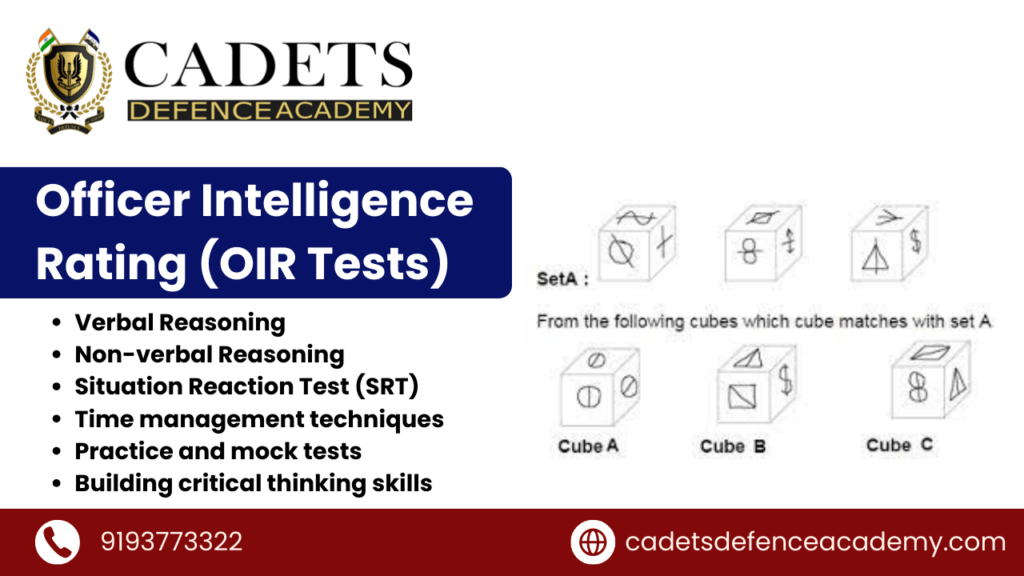
Before diving into the strategies, let’s understand the components of the OIR tests:

  • Verbal Reasoning: Assessing your ability to comprehend and analyze written information.
  • Non-verbal Reasoning: Testing your spatial and abstract reasoning skills.
  • Situation Reaction Test (SRT): Evaluating your responses to hypothetical scenarios.

Strategies for Acing the OIR Tests

To excel in the OIR tests, consider the following strategies:

  • Time management techniques: Allocate time wisely to each section to ensure completion.
  • Practice and mock tests: Familiarize yourself with the test format and practice regularly.
  • Building critical thinking skills: Enhance your ability to analyze situations and make informed decisions.

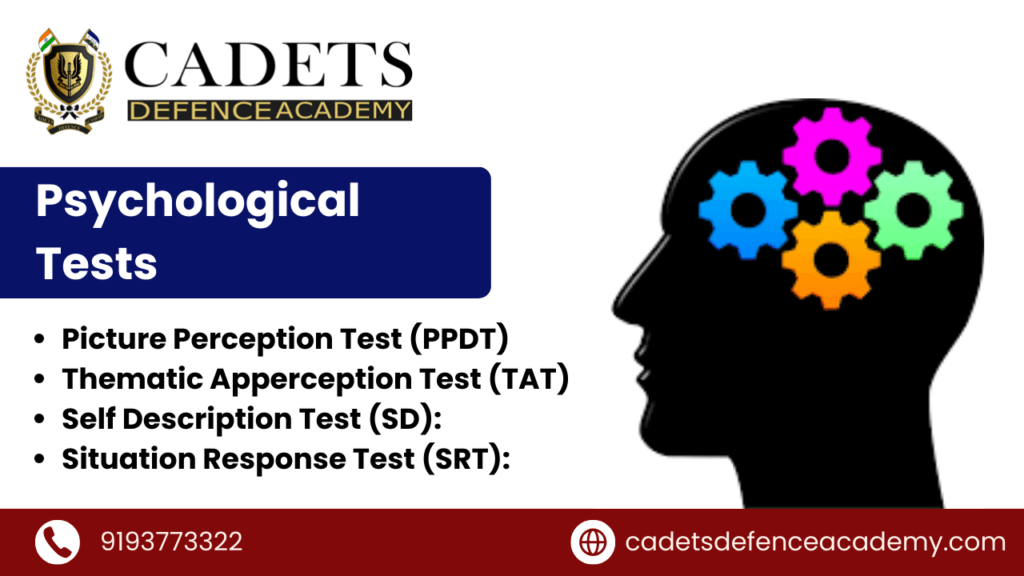
Stage 2: Psychological Tests

Now, let’s demystify the psychological tests:

NDA SSB psychological test coaching center in dehradun WITH CADETS DEFENCE ACADEMY IN DEHRADUN
  • Picture Perception Test (PPDT): Interpreting a given image and crafting a story around it.
  • Thematic Apperception Test (TAT): Analyzing a series of ambiguous images and narrating a story.
  • Self Description Test (SD): Reflecting on your own personality traits.
  • Situation Response Test (SRT): Responding to various real-life situations.

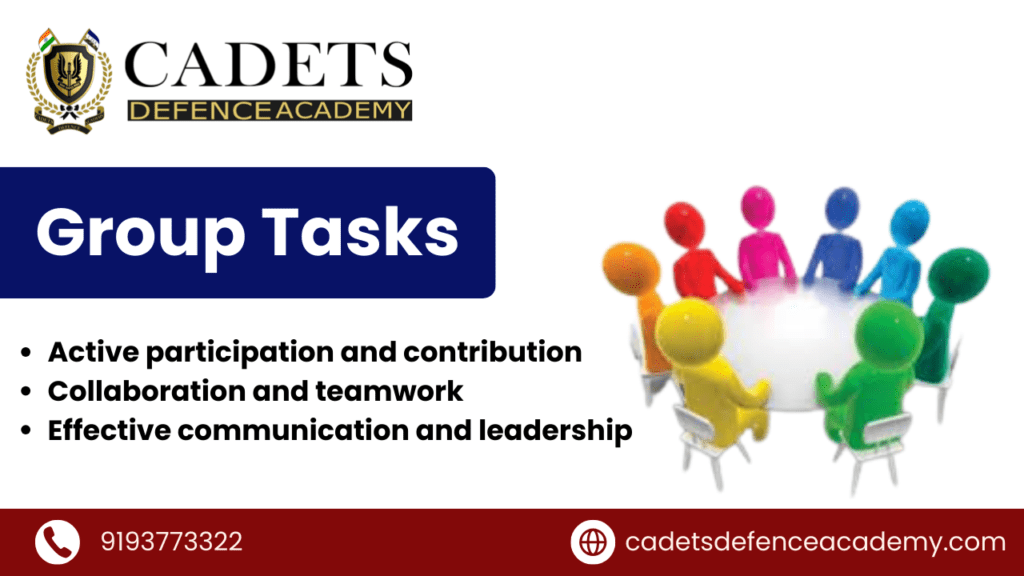
Stage 3: Group Tasks

Group tasks are integral to the NDA SSB process as they assess your ability to work effectively in a team. Understanding the different types of group tasks, such as Group Discussion (GD), Progressive Group Task (PGT), and Final Group Task (FGT), is crucial for success.

best Group Tasks coaching center in dehradun with cadets defence academy

Leading the Way in Group Tasks

To excel in group tasks, focus on:

  • Active participation and contribution: Contribute meaningfully to discussions and tasks.
  • Collaboration and teamwork: Work cohesively with team members to achieve common goals.
  • Effective communication and leadership: Communicate clearly, listen attentively, and demonstrate leadership qualities when necessary.

Stage 4: Interview

The interview stage is a critical part of the NDA SSB interview process. Prepare yourself by understanding the different types of interviews conducted and practicing common interview questions.

nda ssb interview coaching center in dehradun with cadets defence academy
  • Understanding the different types of interviews: Be prepared for personal, technical, and situational questions.
  • Preparing for common questions: Anticipate questions related to your background, interests, and aspirations.
  • Presenting yourself confidently and authentically: Showcase your strengths, experiences, and values with confidence and authenticity.

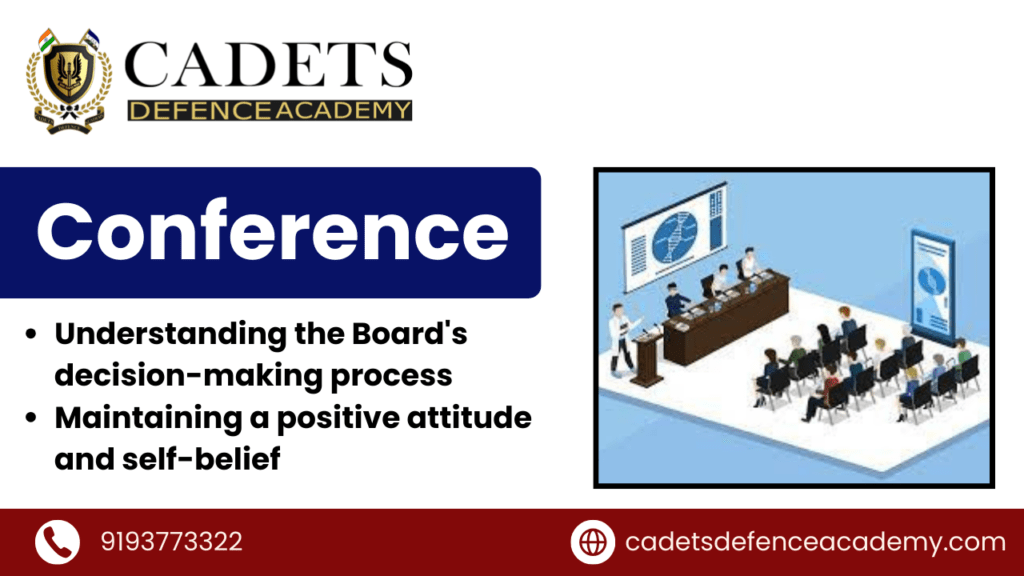
Stage 5: Conference

The conference stage marks the culmination of the NDA SSB interview process. Understand how the board evaluates candidates and maintain a positive attitude throughout.

best nda ssb Conference with cadets defence academy
  • Understanding the Board’s decision-making process: Recognize that the board evaluates your overall performance across all stages.
  • Maintaining a positive attitude and self-belief: Stay confident in yourself and your abilities, regardless of the outcome.

Join Cadets Defence Academy Dehradun for top-notch coaching tailored specifically for NDA SSB interviews. Our academy provides comprehensive guidance on every aspect of the NDA SSB process, including the interview, physical tests, and preparation strategies. With experienced faculty and a proven track record of success, we ensure that every cadet is well-equipped to excel in their NDA SSB interview. Don’t miss out on the opportunity to receive expert guidance at one of our centers. Prepare effectively, understand the NDA SSB interview dates, and embark on your journey towards success with Cadets Defence Academy.

Reach Us

NDA vs IMA: Cadet Daily Routine Explained

NDA vs IMA: Cadet Daily Routine Explained

NDA vs IMA: Cadet Daily Routine Explained Table of Contents Are you dreaming of an illustrious military career but find yourself torn between different paths? At Cadets Defence Academy, recognized as the leading best NDA Coaching in Dehradun, we know that choosing the right academy is your first major strategic decision. While both institutions mold raw youth into exceptional leaders, they operate on fundamentally different philosophies and timelines. If you want to know what is NDA cadet daily routine compared to the IMA, you are in the right place. To give you the ultimate cadet life comparison, we have to look at the day-to-day grind. Both the National Defence Academy (NDA) and the Indian Military Academy (IMA) operate on incredibly demanding schedules that kick off before dawn, usually between 4:00 and 5:00 AM. These early hours are packed with PT exercises NDA vs IMA, parade drills, rigorous academics, and evening exercises. However, the core difference lies in their scope: the NDA dedicates three years to building a foundation of university academics and basic military skills for young high school graduates. In contrast, the IMA concentrates its 1.5-year curriculum entirely on advanced combat tactics, forging graduates into the elite, battle-ready “gentleman cadet.” The Basics: NDA vs IMA Cadet Routine Comparison Chart Before we dive into the minute-by-minute daily life of an NDA cadet explained, here is a quick overview of how the two institutions stack up. Feature National Defence Academy (NDA) Indian Military Academy (IMA) Location Khadakwasla, Pune Dehradun, Uttarakhand Duration 3 Years (6 Terms) 1 to 1.5 Years Trainee Title Cadet Gentleman Cadet (GC) Wake-up Time 4:00 AM – 4:30 AM 4:00 AM – 5:00 AM Core Focus Tri-service foundation + University Degree Exclusive Army tactical & combat training Famous Alumni Capt. Manoj Kumar Pandey (PVC), 2/Lt Arun Khetarpal (PVC) Field Marshal Sam Manekshaw, Capt. Vikram Batra (PVC) Daily Routine: NDA vs IMA Cadet Schedules Military academies forge future leaders through highly structured, unrelenting daily timetables. The differences in NDA and IMA routines highlight their unique approaches to building physical endurance, mental sharpness, and unbreakable discipline. Wake-up and Morning PT: 4:00 AM vs 5:00 AM Start If you are wondering when the IMA cadet day starts, or what the NDA wake up time cadets experience is like, prepare to be an early bird. At the NDA, the day bursts into action with the reveille bugle sounding between 4:00 AM and 5:30 AM. This immediate start is designed to instill lifelong discipline in young teenagers. Cadets have mere minutes to handle their morning hygiene before sprinting to the drill square. Similarly, the IMA reveille time for cadets demands that Gentlemen Cadets are up by 4:00 AM, ready to report to their senior under-officers. The NDA physical training timetable kicks off around 5:00 AM. For an hour, cadets endure grueling running sessions, rope climbing, sit-ups, and obstacle courses. Over at Dehradun, the IMA morning PT and drill lasts for about 90 minutes. This isn’t just about building muscle; it is about forging the mental armor required to lead troops under fire. Following PT, both academies give cadets a notoriously tight window to shower, change into their precise uniforms, and rush to breakfast. Academic Hours: 7:30 AM–1:30 PM vs 8:30 AM–1:30 PM When examining the NDA vs IMA: Cadet Daily Routine Explained, the academic block showcases the biggest contrast. The NDA class hours for cadets run from 7:30 AM to 1:30 PM. Because these cadets are earning their bachelor’s degrees, they dive into heavy subjects like physics, computer science, military history, and foreign languages. Conversely, the IMA class and lecture timetable begins slightly later at 8:30 AM and extends to 2:30 PM. Since GCs are already college graduates, their classes are purely military-focused, centering on warfare strategy, army tactics, and service-specific knowledge. Both schedules are grueling, but IMA cadets do get a brief respite—a 25-minute snack break around 11:20 AM for coffee and refreshments to keep their energy up for tactical studies. Evening Study and Lights Out: 6:30 PM–10:30 PM vs 6:00 PM–10:00 PM After the afternoon sports, the NDA evening drill routine transitions into structured study time. From 6:30 PM to 8:00 PM, NDA cadets hit the books, review their JNU coursework, and prep for exams. The IMA evening activities cadets experience involves a strict study period from 6:45 PM to 8:00 PM, where GCs are mandated to be at their desks studying tactical manuals. Dinner follows between 8:30 PM and 9:00 PM. While NDA cadets eat at a rapid, disciplined pace, IMA cadets sometimes find themselves so exhausted from the IMA weapon training routine that they might skip dinner for a few extra minutes of rest. Finally, the cadet sleep hours in NDA IMA begin with lights out. NDA shuts down between 10:00 PM and 10:30 PM, while the IMA enforces a strict 10:00 PM lights-out policy, actively monitored by battalion duty officers to ensure maximum recovery. Training Modules and Physical Development To truly grasp the NDA vs IMA: Cadet Daily Routine Explained, we must look at how these institutions physically transform civilians into warriors. Basic Training: Orientation Capsule vs Foundation Course The typical day in NDA for cadets during their first year involves Basic Military Training (BMT). This gradual, layered curriculum balances university academics with military orientation, capping off with the grueling “Ex CAMP INITIAL.” The IMA takes a different route. They utilize a Foundation Course that throws graduates right into the deep end. It is an exclusive, military-only immersion focusing heavily on leadership training IMA routine, weapon handling, and intense drills from day one. Advanced Training: Obstacle Courses vs Route Marches As NDA cadets mature through their terms, their tactical training scales up via famous camps: Camp Green Horn (2nd Term) Camp Rover (4th Term) Camp Torna (6th Term) – fiercely named after the teenage Maratha warrior Shivaji’s first victorious fort capture. These camps feature complex obstacle courses testing endurance and on-the-spot decision-making. On the flip side, the IMA officer cadet schedule prioritizes battle drills and brutal route

10 PPDT Pictures for SSB Interview with Responses from Recommended Candidates

10 PPDT Pictures for SSB Interview with Responses from Recommended Candidates

10 PPDT Pictures for SSB Interview with Responses from Recommended Candidates Table of Contents The Picture Perception and Discussion Test (PPDT) is a core psychological assessment used during the Stage 1 Screening of the Services Selection Board (SSB) interview. As one of the very first tests you will face, it acts as a primary filter to identify candidates who possess the right blend of observation, imagination, and communication skills. Beyond just testing your creativity, the PPDT is designed to evaluate how you perceive ambiguous situations, express your ideas, and collaborate or lead within a team setting. The test is broken down into two main phases: Phase 1: Picture Perception In this initial stage, your observation and quick-thinking skills are put to the test. The Observation Window: You will be shown a hazy or blurred photograph on a screen for exactly 30 seconds. The Writing Phase: Immediately after, you are given 4 minutes to write a realistic short story based on what you saw. Required Details: Your story must clearly identify: The total number of characters in the scene. The specific age, gender, and mood (positive, negative, or neutral) of each character. A structured plot that explains the background (what led to the current situation), the present action (what is happening in the picture), and a logical outcome (what will happen in the future). Phase 2: Group Discussion (GD) Once the writing phase is over, the focus shifts to your interpersonal and leadership skills. Individual Narration: Candidates are divided into batches of 10 to 15. You will first take turns narrating your individual story to the rest of the group. Collaborative Discussion: After everyone has spoken, the group must discuss the various narratives and work together to formulate one common, agreed-upon story. This phase heavily tests your clarity of thought, self-confidence, and ability to function as a cooperative team member.https://upsc.gov.in/ Core Objectives of the Assessors The selection board uses the PPDT to look for specific Officer Like Qualities (OLQs), primarily focusing on: Your mental alertness and imaginative perception. Your verbal communication and ability to articulate thoughts clearly. Your group dynamics, including how well you listen, adapt, and lead. Note: You are not judged solely on the brilliance of your written story, but equally on how constructively you participate in the group discussion. Pro-Tips for PPDT Success To perform well in this crucial screening test, keep these strategies in mind: Observe Calmly: Use your 30 seconds wisely to focus on the core details of the hazy image without panicking. Keep it Constructive: Write a story that is highly logical, realistic, and ends on a positive note. Avoid unnecessary drama. Prioritize Clarity: Keep your handwriting legible and your sentence structure simple. Project Confidence: When it is your turn to narrate, speak loudly and clearly. Be a Team Player: During the GD, listen respectfully to others. Help guide the group toward a common conclusion without arguing or showing aggression. Ultimately, clearing the PPDT requires consistent practice, a strong presence of mind, and an unwaveringly positive attitude. What is PPDT and Why is it Important? Let me explain this simply. The Picture Perception and Discussion Test (PPDT) acts as a very crucial Stage-1 screening test in the SSB interview. The board conducts it to assess a candidate’s imagination, observation power, and communication skills. The process involves observing a blurry or hazy picture on a screen for exactly 30 seconds, writing a story in 4 minutes, and then narrating and discussing it within a group to reach a common consensus. Key Aspects of PPDT you must know: Process: Candidates are shown a blurry, black-and-white picture for 30 seconds. Story Writing (4 minutes): You must fill in a square box with details about the number of characters, their mood, age, sex, and write a story that includes a background, present action, and a final outcome. Narration & Discussion: Each candidate narrate their story one by one. After that, a group discussion (GD) starts to agree on one common group story. Assessment Criteria: The assessors do not just want creativity. They focus on positive thinking, logical story structure, your social adaptability, and how much confidence you have. Tips for Success: Observe Carefully: Quickly note the gender, age, and mood of the characters in the 30 seconds. Positive Theme: Make sure the story has a logical, constructive theme with a very practical outcome. Be Proactive: Your main character (hero) should take direct action to solve a problem. Confident Narration: Speak clearly and listen to others during the GD. Avoid aggressive behavior at all costs. Keep it Realistic: Do not write overly fantastical or superman plots. Keep the story simple and relevant to the image. For more on officer-like qualities, you can always check the Join Indian Army Official Website. Before We Begin – How to Approach PPDT Like a Recommended Candidate Before jumping into the 10 PPDT Pictures for SSB Interview, please keep these golden rules in your mind. If you follow these during your PPDT image practice – SSB interview preparation, you will definitely see improvement. Do not try to be dramatic or filmy. Life is not a Bollywood movie. Keep your characters realistic and age-appropriate. If you are 20, make your hero around 20-25. Focus on the formula: Problem → Planning → Action → Result. Show teamwork, responsibility, and taking initiative. Speak confidently during your individual narration and discussion. Remember, simple and clear stories always leaves a stronger impression than complicated and confusing ones! Let us start with our list of 10 PPDT Pictures for SSB Interview. PPDT Picture 1: Organising a Career Guidance Seminar Story: Sumit, a 23-year-old postgraduate student, noticed a crowd of villagers gathered around the Panchayat notice board in his hometown. Upon approaching, he realised that many peoples were struggling to understand the complex eligibility criteria for a newly launched government skill-development scheme. Sensing their confusion, Sumit took the initiative to simplify the information. He spent the afternoon researching the scheme’s details on his laptop and then returned to the board. He

Career Opportunities in the Indian Armed Forces After Graduation

Career Opportunities in the Indian Armed Forces After Graduation

Career Opportunities in the Indian Armed Forces After Graduation Table of Contents If your looking for a life full of pride, adventure, and respect, you are in the right place. Just picture yourself leading troops at 25, with a steady paycheck and respect from all. Exploring the Career Opportunities in the Indian Armed Forces is a game changer for many young students. Finding the right Career Opportunities in the Indian Armed Forces After Graduation is not just about getting a job; its about choosing a lifestyle. Career opportunities in the Indian Armed Forces after graduation include officer-level roles via exams like CDS exam after graduation, AFCAT for degree holders, and SSC Tech. Graduates can secure permanent or short-service commissions in technical, non-technical, or flying branches. Top Career Opportunities in the Indian Armed Forces After Graduation (The Big Picture) Career opportunities in the Indian Armed Forces after graduation include officer-level roles in the Army, Navy, and Air Force via exams like UPSC CDS for graduates, AFCAT air force jobs, and technical entries (SSC tech army jobs / TGC). Graduates can join for permanent or short-service commissions (SSC) through the SSB interview process, offering technical, non-technical, flying, or specialized roles. Top Career Entry Points After Graduation Combined Defence Services (CDS) Exam: Conducted twice a year by UPSC for IMA, Naval Academy, Air Force Academy, and Officers Training Academy (OTA). Air Force Common Admission Test (AFCAT): For Flying and Ground Duty (Technical/Non-Technical) branches in the Indian Air Force. Indian Navy Entrance Test (INET) & Direct Entries: For Executive, Technical, and Education branches. This is a top Indian Navy officer entry. Short Service Commission (SSC) Technical/Non-Tech: Direct entry (no written exam) for engineering jobs armed forces to join the Indian Army. NCC Special Entry: For NCC ‘C’ Certificate holders with a minimum of 50% graduation marks. Judge Advocate General (JAG) Entry: For law graduates (LLB) to join the Army legal branch.Military Nursing Service (MNS):Female nursing graduates (B.Sc/Post Basic) aged 21–35 years can join the Army as Nursing Officers, specializing in healthcare for soldiers and families. Key Aspects of Service Commission Type: Permanent Commission (lifetime career) or Short service commission army (10-14 years). Branches: Include Infantry, Artillery, Engineers, Army Service Corps, Signals, and Electrical & Mechanical Engineers. Specialized Roles: Options exist for women through SSCW army for females and NCC special entries. Selection Process: Includes written tests, Service Selection Board (SSB) interviews, and medical exams. Other Opportunities Territorial Army: A part-time option for civilians to serve the nation. Central Armed Police Forces (CAPF): Exam conducted by UPSC for Assistant Commandant posts in BSF, CRPF, etc. Main Entry Paths for Graduates to grab Career Opportunities in the Indian Armed Forces Finding your way into the uniform is easier when you know the exams. There are many Career Opportunities in the Indian Armed Forces but you need the right strategy. Let me explain the core exams. Combined Defence Services (CDS) Exam If you are looking for the best CDS exam after graduation, you should know the process. The UPSC conducts this test twice a year for the Army, Navy, and Air Force. It is literally one of the biggest Core Entry Exams out their. You can apply directly at upsc.gov.in. Securing Army officer jobs post graduation starts with this paper! Air Force Common Admission Test (AFCAT) Now, lets talk about AFCAT for degree holders. If you want to fly high, this is it. We cover AFCAT for both the Air force flying branch grads and Ground duty air force entry. For example, in 2025 we saw around 300 flying branch spots, and tech grads really shine here. If you want Technical Jobs, the Air Force loves B.Tech students. Pro tip: Practice online mocks vigorously. Don’t forget the EKT (Engineering Knowledge Test) if you are aiming for tech roles. It is one of the coolest Career Opportunities in the Indian Armed Forces After Graduation. Short Service Commission (SSC) Options Maybe you don’t want a full 30-year career. Detail SSC-Tech is perfect for Army engineers. This is a huge part of the Short Service Options. Quote from Col. Rajesh Singh (retd.): “SSC lets you serve 10-14 years, gain skills for civilian jobs.” The bullet perks for SSC entry armed forces include: Quick entry process. No long bonds keeping you forever. Great transition to corporate leadership later. This direct SSC technical army entry is amazing for modern youth. Key Roles and Specializations in Career Opportunities in the Indian Armed Forces Once you clear the exams, what do you actually do? The Career Opportunities in the Indian Armed Forces vary wildly based on your branch. Army Branches: Infantry to Engineers If you are aiming for Indian Army careers for graduates, the roles are diverse. The Infantry leads the combat from the front, while the Corps of Engineers builds bridges and roads in tough terrains. Navy Careers: Surface to Submarines Looking for Navy Opportunities? Deck officers sail massive ships, while submariners handle intense stealth ops underwater. Whether its Navy technical branch jobs or executive roles, you travel the world. Target the 10+2 B.Tech entry or the Navy SSC for graduates for a direct entry. It is a fantastic Career Opportunities in the Indian Armed Forces. Air Force: Pilots and Cyber Warriors The Air Force Roles are straight out of a movie. We are highlighting fighter pilots, transport crew, and now, heavy IT security. There are roughly 250 pilot slots yearly, and the cyber wing grew 40% post-2024. If you want IT jobs Indian military, the Air Force is calling. Tip: Fitness is key here. Join NCC during college for a massive edge in the Selection process armed forces. Training, Pay, and Lifestyle Perks of Career Opportunities in the Indian Armed Forces You might be wondering about the lifestyle. Trust me, the Career Opportunities in the Indian Armed Forces After Graduation offer perks no corporate job can match. Rigorous Academy Life Let me describe IMA, INA, and AFA to you: it means 49 weeks of intense drills and leadership building. It is

Call Now Button