
How to Stay Motivated and Not Get Daunted by NDA Exam Syllabus

How_to_Stay_Motivated_and_Not_Get_Daunted_by_NDA_Exam_Syllabus

Table of Contents

Introduction

It can be difficult to stay motivated when preparing for the NDA exam because there is a lot to cover and you may feel stressed out to perform well. But don’t worry, there are strategies for keeping your focus and enthusiasm while studying.

First of all, it’s important to understand that the NDA exam syllabus covers a lot of topic, and it’s normal to feel bit overwhelmed by the amount of it. Also, a lot of people expect you to succeed in it. But believe me, there are some tricks that will help you stay motivated and focused as you prepare for the exam.

Breaking Down the NDA Exam Syllabus

The Union Public Service Commission (UPSC) conducts the NDA exam twice a year. It’s a highly competitive exam that selects the brightest young minds for the Indian Army, Navy, and Air Force.

Understanding the exam pattern and syllabus is vital for aspirants aiming to join the defence forces.

The NDA exam syllabus consists of two sections: Mathematics and General Ability Test (GAT).

General Ability Test (GAT) – (600 Marks)

The GAT is further divided into English and General Knowledge.

English (200 Marks):

  • Comprehension
  • Vocabulary
  • Use of Grammar
  • Error Correction
  • Idioms and Phrases

General Knowledge (400 Marks):

  • History:Ancient, Medieval, and Modern Indian History, World History
  • Geography:Physical Geography of India and the World, Important Geographical Features
  • Current Affairs:National and International Events of Significance
  • Science:Physics, Chemistry, Biology (Basic Science at 10+2 level)
  • Polity and Economy:Indian Political System, Indian Economy

Mathematics (300 Marks)

The Mathematics section covers topics from Class 11th and 12th:

  • Algebra:Sets, Relations & Functions, Complex Numbers, Matrices & Determinants, Quadratic Equations, Permutations & Combinations, Binomial Theorem, Logarithms, Progression
  • Calculus:Differential Calculus, Integral Calculus
  • Geometry:2D & 3D Geometry, Trigonometry
  • Statistics & Probability:Basic Concepts of Statistics, Probability

You can find more detailed information about the specific topics covered here 

How to stay motivated during NDA exam preparation

Staying motivated throughout NDA exam prep is crucial for success. Here are some tips to keep you going:

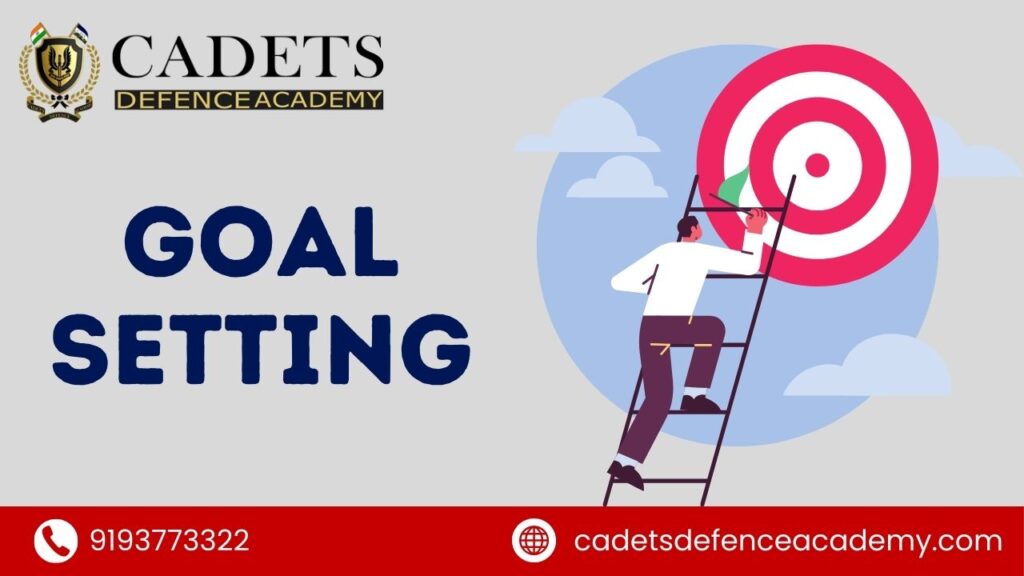
Goal Setting

Set Clear Goals:Think about what you want to achieve in the NDA exam. What score are you aiming for? Are there specific areas where you need to improve? Please take a look at the nda syllabus and break it down into smaller, more manageable parts. Set deadlines for each section so you know what you need to focus on and when. By completing these smaller goals, you’ll feel a sense of accomplishment that can keep you motivated throughout your preparation.

Goal Setting coaching in dehradun

Find Your Why:Take some time to think about why you want to join the National Defence Academy. You may have a strong desire to serve your country or have always dreamed of a career in the armed forces. Reflecting on these reasons can help reignite your motivation and remind you why you’re taking the nda exam in the first place.

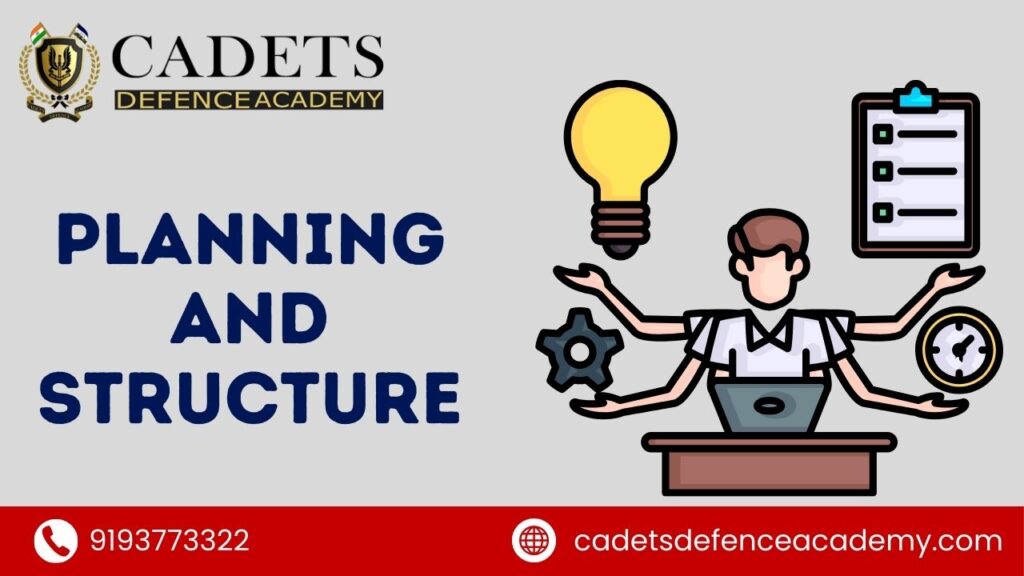
Planning and Structure

Study Schedule:Create a realistic study schedule that fits your daily routine. Set aside specific times for each subject you need to study and try to stick to it as much as you can. Maintaining a schedule can help you stay organised and avoid cramming too much studying into a single session

Active Learning coaching in dehradun

Breaks: It’s important to avoid overworking yourself when studying. Instead of aiming to study for a longer period of time without a break, aim to take little breaks every 45 to 60 minutes. Get up from your desk, stretch your legs, and spend some time doing something you enjoy, such as working on a hobby or going for a short walk during these breaks. When you return to your studies, it will help you focus and clear your head.

Active Learning

Mock Tests:It’s helpful to practice by taking Mock Tests and looking at previous year question papers. This gives you a better understanding of what to expect on the actual test, it will help you to see which areas you’re strong in and which ones you need to work on and improve your ability to manage your time effectively during the exam. So, make sure to Include Mock tests and previous year question papers in your study schedule.

Find a Study Partner: You can stay focused and motivated by studying with a friend or joining an online study group for the NDA exam. Studying in groups allows you to discuss various concepts, evaluate each other’s knowledge, and share useful resources. In this way you’re not studying alone, and you can help one other along the way Working with a friend or joining an online study group could help you stay on track and inspired as you prepare for the test.

Success Stories

One great way to stay motivated while studying for the NDA exam is to read or watch success stories of people who have already cleared the exam or succeeded in their respected field. Here’s why:

Inspiration:Listening to success stories can be really inspiring. It can inspire and give you hope, that they also faced challenges but still achieved their goal. It shows that you can achieve your goals if you put in enough time and effort. Spend some time reading about these success stories, and let them encourage you on your journey to clear the NDA exam.

You can see our latest selections here 

Strategies:People who have experienced success often talk about the strategies they used to pass the exam. They might talk about particular resources or materials they found helpful, their time management techniques, or how they overcome their weaknesses. By reading these stories, you can pick some helpful tips and adjust them to fit your study plan. So, spend some time reading through these success stories to see what you can learn to help you prepare better for your own exams.

Belief:When you see others succeed, it can boost your confidence in your ability. It shows that people with different backgrounds, weakness and strength can do this so you can too. So, be inspired by these stories of success and have confidence in yourself. Your goals of joining in the National Defence Academy are achievable with dedication and effort.

Here are some tips for getting the most out of success stories:

Look for stories that resonate with you.Look for stories of people who passed the NDA exam and had faced challenges that you’re facing today. these stories can be really helpful because it shows that others have been in similar situation and still succeeded. You might learn some valuable lessons or get inspired by them. So, while you’re getting ready for your exam, spend some time reading these stories and seeing what you can learn from them..

Focus on the strategies, not just the results.When you read or watch success stories, don’t just focus on results. Please take a closer look at how they got there. Try to find practical advice that you can use in your own preparation. By analyzing their journey and learning from their experiences, and you can improve your chances of success.

Don’t compare yourself excessively.It’s important to understand that everyone is different and everyone is facing or has faced difficulties in their life, so Instead of comparing yourself with others, focus on your strengths and weaknesses. Take some time to evaluate what you’re good at and where you need improvement. Then, create a schedule that fits your needs and preferences.

Staying Positive:

Reward Yourself: Celebrate your achievements, no matter how small. Reward yourself for finishing a section, doing well on a practice test, or just sticking to your study plan. By treating yourself to something nice for all of your hard work, you encourage yourself to keep up your good study habits.

Positive Self-Talk:Having doubts from time to time is normal, but try not to let them control you. Take a minute to remind yourself of your objectives and all of your past accomplishments if you’re feeling down.

Additional Tips

Find a quiet and comfortable study environment:It’s important to find a peaceful and cosy place to study. Find a place where you can concentrate without any distractions. Creating the right study environment can help you stay productive and make the most of your study sessions.

Organize your study materials: Make sure to organize all your study materials. Keep your notes, textbooks, and any other resources in order So that you can easily find what you need while studying.

Take care of yourself.Get enough sleep, eat nutritious foods, and exercise regularly. Taking care of your body and mind is crucial for staying focused while studying.

Contact Us

For any inquiries or assistance regarding NDA coaching in Dehradun, feel free to reach out to us. Here’s how you can get in touch:

Address:  Sahastradhara Rd, near kriti appartment, opp. shani dev mandir, B Block, Aman Vihar, Dehradun, Uttarakhand 248001
Visit us at our campus located in Dehradun.

Phone Numbers:
You can contact us directly via phone for immediate assistance. Our phone numbers are +91- 099970 34744and + 91-7599367318.

Email: cadetsdefenceacademy@gmail.com
Do you have a question or require additional details? Send us an email at cadetsdefenceacademy@gmail.com  Our team will get back to you promptly with the answers you need.

Website & Social Media Links:
Explore our website, www.cadetsdefenceacademy.com, for comprehensive details about our NDA coaching programs and facilities. Stay updated with the latest news and announcements by following us on social media. Find us on Facebook, Twitter, and Instagram

Feel free to reach out to us through any of the channels mentioned above. We’re here to assist you on your journey towards achieving your NDA coaching goals in Dehradun.

Reach Us

CAPF (Assistant Commandant) vs NDA: Career Progression & Salary Comparison

CAPF (Assistant Commandant) vs NDA: Career Progression & Salary Comparison

CAPF (Assistant Commandant) vs NDA: Career Progression & Salary Comparison Table of Contents   Important Topics You Need To Prepare for AFCAT Exam Every year, thousands of aspiring defence professionals stand at a crossroads: Should I prepare for NDA or CAPF (Assistant Commandant)? It’s one of the most common questions we get at Cadets Defence Academy, and rightfully so. Both are prestigious pathways into India’s paramilitary forces, both offer excellent career prospects, and both provide handsome salaries and respect. But they’re fundamentally different in how you enter, what you do, and where your career takes you. The truth? There’s no “better” choice—only the choice that’s better for YOU. In this guide, we’ll break down everything you need to know about both CAPF (Assistant Commandant) and NDA to help you make an informed decision. Let’s dive in. What is NDA? (Quick Refresher) The National Defence Academy (NDA) is India’s premier tri-service training academy located in Khadakwasla, Pune. It’s the entry point to become a commissioned officer in the Indian Army, Navy, or Air Force. Key Points: Entry Age: 16.5 to 19.5 years (typically after 12th standard) Service: Army, Air Force, or Navy Rank After Training: Second Lieutenant (Army/Air Force) or equivalent in Navy Training Duration: 3 years at NDA + service-specific training Career Span: Up to 60 years (with extension prospects) What is CAPF (Assistant Commandant)? (Explained) CAPF stands for Central Armed Police Force, and there are five main forces under this umbrella: BSF (Border Security Force) CRPF (Central Reserve Police Force) ITBP (Indo-Tibetan Border Police) SSB (Sashastra Seema Bal) NIA (National Investigation Agency – recently added) When we talk about CAPF recruitment for officers, we’re specifically referring to the Assistant Commandant rank—the entry-level officer position in these paramilitary forces. Key Points: Entry Age: 20-23 years (typically after graduation) Service: BSF, CRPF, ITBP, SSB, or NIA Rank: Assistant Commandant (starting position) Training Duration: 6 months to 1 year at respective force academies Career Span: Up to 60 years (with extension prospects) Side-by-Side Comparison: CAPF vs NDA 1. Eligibility Requirements Aspect NDA CAPF (AC) Age 16.5 – 19.5 years 20 – 23 years Education 12th Pass Bachelor’s Degree (Any Stream) Nationality Indian citizen Indian citizen Physical Fit (specific height/vision standards) Fit (specific height standards) Marital Status Unmarried males only Unmarried only Best For School dropouts/12th students College graduates Key Difference: NDA is ideal if you want to start your defence career right after 12th, while CAPF is for those who’ve completed a bachelor’s degree. Verbal Ability in English 2. Recruitment Process NDA Selection Process: Written Exam – 2 papers (Mathematics 300 marks, General Ability Test 600 marks) Medical Test – Physical fitness & medical examination SSB Interview – 5 days of psychological assessment, group tasks, and personal interviews Merit List – Final selection based on cumulative performance Training – 3 years at NDA Pune Total Timeline: ~8-9 months CAPF (AC) Selection Process: Written Exam – 2 papers (General Studies, Law/General Knowledge) Physical Standard Test (PST) – Run 5km, other fitness metrics Medical Examination – Thorough medical checkup Interview – Not as extensive as NDA’s SSB, but still important Final Selection – Merit-based Total Timeline: ~6-7 months Advantage: CAPF has a quicker recruitment process compared to NDA. 3. Training & Academy Experience NDA Training: Duration: 3 years (longest among all defence academies) Location: Khadakwasla, Pune (residential) Focus: Foundation building, leadership development, academics, physical training Facilities: World-class infrastructure, sports, combat training Post-NDA: Service-specific advanced training (1-2 years more) CAPF Training: Duration: 6 months to 1 year (depending on the force) Location: Different for each force (BSF, CRPF have separate academies) Focus: Practical operational training, paramilitary tactics, real-world scenarios Facilities: Good but less extensive than NDA Post-Academy: Direct posting to field operations Advantage: NDA provides more holistic officer training; CAPF is quicker and more field-focused. 4. Initial Salary & Benefits (Year 1) NDA Officer (After 3 years of training, as Second Lieutenant): Component Amount (Monthly) Basic Pay ₹56,100 – ₹58,900* Dearness Allowance (DA) ~₹25,000-30,000 House Rent Allowance (HRA) ₹8,416 – ₹11,780 Technical Allowance ₹5,400 (where applicable) Total In-Hand ₹95,000 – ₹1,06,000 *Subject to current Pay Commission; exact amounts vary by service (Army/Air Force/Navy) Additional Benefits: Free accommodation (on-base) Free medical for self & family Leave travel concession Subsidized rations Gratuity (up to ₹20+ lakhs) Total Compensation (Including Benefits): ₹2.5-3 lakhs/month CAPF Assistant Commandant (First posting): Component Amount (Monthly) Basic Pay ₹44,900 – ₹46,000* Dearness Allowance (DA) ~₹18,000-22,000 House Rent Allowance (HRA) ₹6,735 – ₹8,960 Special Duty Allowance ₹8,000 – ₹15,000 (varies by force) Total In-Hand ₹77,000 – ₹92,000 *Subject to current Pay Commission; exact amounts vary by force Additional Benefits: Free accommodation (on-base) Free medical for self & family Leave travel allowance Gratuity Pension (after 20+ years) Total Compensation (Including Benefits): ₹2-2.5 lakhs/month Salary Advantage: NDA officers earn 15-25% more than CAPF officers at entry level. 5. Career Progression & Promotion NDA Officer Career Path: Second Lieutenant (3 years) ↓ Lieutenant (9-10 years) ↓ Captain (12-13 years) ↓ Major (16-17 years) ↓ Lt. Colonel (20+ years) ↓ Colonel (24+ years) ↓ Brigadier & Above (Senior positions) Key Advantages: Faster promotion track (3-4 year intervals initially) More senior positions available Can reach General/Admiral ranks (highest positions) Better posting opportunities (India & abroad) Higher pension benefits CAPF (AC) Career Path: Assistant Commandant (5-6 years) ↓ Deputy Commandant (8-10 years) ↓ Commandant (13-15 years) ↓ Senior Commandant/Commander (18+ years) ↓ Higher positions limited Key Limitations: Promotion cycle is slower (5-8 year intervals) Fewer senior positions available Limited scope to reach top ranks Mostly field-based operations Posting restricted to force-specific locations Advantage: NDA has significantly better career progression with more promotion opportunities and higher final ranks. 6. Long-Term Salary Growth NDA Officer Salary (By Rank): Rank Years of Service Monthly Salary (In-Hand) Second Lieutenant 0-3 ₹95,000 – ₹1,06,000 Lieutenant 3-9 ₹1,20,000 – ₹1,45,000 Captain 9-12 ₹1,50,000 – ₹1,85,000 Major 12-16 ₹1,95,000 – ₹2,40,000 Lt. Colonel 16-20 ₹2,50,000 – ₹3,00,000 Colonel 20+ ₹3,10,000 – ₹4,00,000+ CAPF (AC) Salary (By Rank): Rank Years of Service Monthly Salary (In-Hand) Assistant Commandant

SSB Psychology Test Explained: TAT, WAT, SRT & SD with Real Examples

SSB Psychology Test Explained: TAT, WAT, SRT & SD with Real Examples

SSB Psychology Test Explained: TAT, WAT, SRT & SD with Real Examples Table of Contents   What Is the SSB Psychology Test? If you are preparing for your SSB interview, you have probably heard seniors talk about the SSB Psychology Test with a mix of fear and confusion. So, what exactly is it? The SSB Psychology Test is the second stage of the five-day Services Selection Board process, conducted right after the screening (PPDT) round. Unlike the written exam, this test does not check your knowledge. It checks who you really are — your natural thoughts, reactions, and personality traits, without giving you time to “perform” or fake an answer. The SSB Psychology Test has four parts: TAT (Thematic Apperception Test), WAT (Word Association Test), SRT (Situation Reaction Test), and SD (Self-Description Test). Together, these four tests are designed by trained psychologists to understand your Officer Like Qualities (OLQs) through your spontaneous responses. Why Does the SSB Conduct a Psychology Test? Every year, thousands of candidates clear the NDA written exam, but very few get recommended at SSB. Why? Because the Armed Forces don’t just need someone who can solve maths problems — they need officers who can lead soldiers, take quick decisions, and stay calm under pressure. The SSB Psychology Test exists to check exactly this. It’s not about intelligence; it’s about character. That is why every response in TAT, WAT, SRT, and SD is analysed for qualities like initiative, courage, social adaptability, and determination — the same OLQs assessors look for throughout the entire SSB process. What Is TAT (Thematic Apperception Test) and How Do You Attempt It? The TAT round shows you 11 picture slides (12th slide is blank), each shown for 30 seconds. After each picture, you get 4 minutes to write a short story based on what you saw. Here’s what most aspirants get wrong: they think TAT is a “creative writing” test. It’s not. TAT reveals your natural thought process. When you look at a hazy image of a man standing near a broken bridge, do you imagine him giving up — or do you imagine him finding a way across? Real Example: Picture: A blurred image of a person standing alone near a cliff. Weak story: “The man was sad and confused about his life.” Strong story: “The man, a mountain rescue volunteer, was assessing the terrain before leading his team down to help a stranded hiker. He completed the rescue successfully.” Notice how the second story shows action, purpose, and a positive outcome — exactly what SSB assessors are trained to notice. How Does the Word Association Test (WAT) Work? In the WAT round, you’re shown 60 words, one at a time, for 15 seconds each. You must write the very first sentence that comes to your mind for each word. The trick here is speed and honesty. There’s no time to overthink, which is exactly the point — WAT captures your instinctive personality. Real Examples of WAT Words and Ideal Responses: Word: Fear → “Fear can be controlled with courage and preparation.” Word: Failure → “Failure teaches lessons that success cannot.” Word: Leader → “A leader takes responsibility for the team’s success and failure.” Word: Death → “Death is a part of life every soldier accepts with courage.” Avoid one-word or negative answers. Full, positive, action-oriented sentences score better in the SSB WAT test. What Is the Situation Reaction Test (SRT) and Why Is It Important? The SRT presents 60 real-life situations in 30 minutes — that’s roughly 30 seconds per situation. Each situation puts you in a tricky scenario, and you must write how you would react. This is arguably the most important part of the psychology test because it directly tests practical decision-making under time pressure. Real Example: Situation: “You are travelling in a train and see an old man collapse suddenly.” Ideal Response: “I informed the train staff immediately, checked the man’s pulse, and arranged for medical help at the next station.” Notice this response is realistic, practical, and action-focused — not heroic or exaggerated. SSB assessors distrust overly dramatic responses; they want to see a candidate who thinks and acts sensibly. What Should You Write in the Self-Description Test (SD)? The SD test asks you to describe yourself from five perspectives: your parents’ opinion of you, your teachers’ opinion, your friends’ opinion, your own opinion of yourself, and the qualities you want to improve. This test checks self-awareness — a quality highly valued in officers. Many candidates make the mistake of writing only positive traits. A balanced, honest SD response, including one or two genuine areas of improvement, is far more convincing to an assessor than an unrealistic, all-positive description. How Should You Prepare for TAT, WAT, SRT, and SD? Practice daily — Write at least 5 TAT stories, 60 WAT words, and 15 SRT situations every day for a month before your SSB. Stay natural — Don’t memorise “model answers.” Assessors can spot rehearsed, robotic responses instantly. Focus on OLQs — Every response should subtly reflect qualities like initiative, cooperation, and determination. Manage time — Since time per item is extremely short, speed and clarity matter as much as content. Get expert feedback — Have a trained SSB mentor review your responses regularly to spot recurring negative patterns you might not notice yourself. How Cadets Defence Academy Helps You Crack the SSB Psychology Test At Cadets Defence Academy, our SSB training module includes dedicated psychology test practice sessions guided by experienced psychologists and retired SSB assessors. From daily TAT and WAT drills to personalised SRT feedback, we help every NDA aspirant build the natural, confident responses that assessors are trained to look for. Final Thoughts The SSB Psychology Test is not something you can “trick” your way through — it’s a genuine reflection of your personality. The best way to succeed in TAT, WAT, SRT, and SD is consistent practice combined with self-awareness. Once you understand what assessors are really evaluating, this stage stops feeling

Ranks in Indian Army: Complete List with Insignia and Responsibilities

Ranks in Indian Army: Complete List with Insignia and Responsibilities

Ranks in Indian Army: Complete List with Insignia and Responsibilities Table of Contents   Have you ever watched a Republic Day parade and wondered what those stars, stripes, and crowns on a soldier’s shoulder actually mean? Every badge tells a story of years served, responsibility carried, and trust earned. Understanding the Ranks in Indian Army is not just useful for aspiring cadets preparing for NDA, CDS, or SSB interviews — it also helps every citizen appreciate the discipline and structure behind one of the world’s largest land forces. In this guide, we will answer the most common questions cadets and parents ask us at Cadets Defence Academy: what are the different ranks, what insignia represents each one, and what duties come with every rank. Let’s break it down in the simplest way possible. What Is the Rank Structure of the Indian Army? The Indian Army rank structure is broadly divided into three groups. This military hierarchy decides who commands whom, who takes which decisions, and how the chain of command flows from the top to the soldier on the ground. The three categories are: Commissioned Officers — the leadership cadre that commands units ranging from a platoon to the entire army. Junior Commissioned Officers (JCOs) — experienced personnel who bridge the gap between officers and soldiers. Non-Commissioned Officers (NCOs) and Other Ranks (OR) — the backbone of the army, made up of soldiers and junior leaders. Each group has its own insignia, uniform markings, and rank flags, so that anyone trained to recognise them can instantly tell who holds what position in the army’s organisational structure. Why Should You Know the Ranks in Indian Army? If you are preparing for a defence career, knowing the army officer ranks and their insignia is part of your basic general knowledge preparation for SSB and written exams. Interviewers often ask candidates to identify rank badges or explain the chain of command. Beyond exams, this knowledge also helps you understand promotion timelines, pay levels, and the kind of responsibilities you can expect at each stage of an army career. It also helps to remember that the Indian military rank system evolved from the British Indian Army. After independence, symbols like the British crown were replaced with Indian emblems such as the Ashoka Lion Capital, reflecting India’s own identity while keeping the same disciplined structure built over generations. Now, let’s go through the complete list of military ranks, from the top all the way down. What Are the Commissioned Officer Ranks in the Indian Army? Commissioned officers form the leadership backbone of the army. They are responsible for strategic planning, troop command, and decision-making at every level — from a small platoon to an entire army command. Officers join as Gentlemen Cadets or Lady Cadets through the NDA, IMA, or OTA after clearing the SSB interview, and they rise through the ranks based on merit, seniority, and performance in courses like the Young Officers Course and Staff College training. Here is the complete officer hierarchy, from highest to entry level. There are ten commissioned officer ranks in total, and substantive promotion up to Lieutenant Colonel is largely based on time served and clearing required exams, while promotion to Colonel and above depends on selection boards and performance evaluation. This is why the pyramid narrows sharply as you move toward the top. Field Marshal This is a five-star rank and the highest honour an army officer can receive, but it is largely ceremonial and not part of the regular organisational structure. It is given only in rare cases to honour truly exceptional wartime service and leadership. In the history of the Indian Army, only two officers have ever held this distinction, and once awarded, the rank is considered lifelong, meaning the recipient is treated as a serving officer for the rest of their life. General The rank of General is the highest active, functional position in the army and is held by the Chief of the Army Staff (COAS), who heads the entire force. A General with a four-star insignia oversees overall strategy, major operational decisions, and the administration of the whole army. The insignia features the Ashoka Lion Capital along with crossed sabres and a star, worn on the shoulder. Lieutenant General A three-star rank, Lieutenant General is typically responsible for commanding an army corps, which includes several divisions. Officers at this level also serve in key staff and administrative roles at Army Headquarters, including senior command positions like Vice Chief of the Army Staff. Major General Holding a two-star insignia, a Major General commands a division — a large fighting formation made up of multiple brigades. This rank also includes appointments as Additional Director Generals and other senior command and staff roles. Brigadier A one-star rank, the Brigadier leads a brigade, which usually comprises around three to four battalions. Brigadiers also serve in important staff appointments such as Brigadier General Staff, helping coordinate operations across multiple units. Colonel A Colonel commands a battalion, the basic fighting unit of the army, and is responsible for its training, discipline, and operational readiness. Many officers spend a significant part of their career working toward this rank, and due to limited vacancies at higher levels, a large number of officers retire as Colonels. Lieutenant Colonel Serving as the second-in-command of a battalion or regiment, a Lieutenant Colonel supports the Colonel in daily administration, training schedules, and operational planning, stepping in to lead when required. Major A Major typically commands a company-sized unit, which is a smaller formation within the battalion. This role involves close supervision of troops, training oversight, and tactical decision-making at the ground level. Captain A Captain commands a platoon or assists in running a company, depending on the corps and regiment. This rank involves direct, hands-on leadership of soldiers during both training and operations. Lieutenant This is the entry-level commissioned rank for newly trained officers fresh out of the academy. A Lieutenant takes on responsibilities that vary by corps, gaining frontline leadership experience before

Call Now Button