
यदि सदिश  ,
 और
 (a, b, c ≠ 1) समतलीय हैं, तो
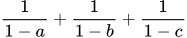 का मान बराबर है
If the vectors , and (a, b, c ≠ 1) are coplanar, then the value of is equal to
सारणिक शून्य; p = 1 − a आदि लेकर  , अतः योग 1।
Coplanarity means 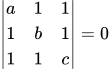 . Subtract row 1 from rows 2 and 3 and write p = 1 − a, q = 1 − b, r = 1 − c; expanding gives
 . Dividing by pqr:
 .
बिंदुओं (−3, 4, −8) और (5, −6, 4) को मिलाने वाली रेखा का XY-समतल से प्रतिच्छेद बिंदु है
The point of intersection of the line joining the points (−3, 4, −8) and (5, −6, 4) with the XY-plane is
z = 0 पर t = 2/3; बिंदु (7/3, −8/3, 0)।
Points on the line: (−3 + 8t, 4 − 10t, −8 + 12t). z = 0 gives t = 2/3, so x = 7/3 and y = −8/3.
यदि दिक्-अनुपात (2, −1, 2) और (x, 3, 5) वाली रेखाओं के बीच कोण  है, तो x का छोटा मान है
If the angle between the lines whose direction ratios are (2, −1, 2) and (x, 3, 5) is , then the smaller value of x is
 , x = 52 या 4; छोटा 4।
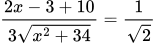 gives
 , i.e. , so x = 52 or 4. The smaller value is 4.
दीर्घवृत्त  के सापेक्ष बिंदु (1, 2) की स्थिति है
The position of the point (1, 2) relative to the ellipse is
 , अतः बाहर।
 , so the point is outside.
y-अक्ष की ऋणात्मक दिशा पर 5 इकाई अंतःखंड काटने वाली और x-अक्ष की धनात्मक दिशा से 120° कोण बनाने वाली रेखा का समीकरण है
The equation of a straight line which cuts off an intercept of 5 units on negative direction of y-axis and makes an angle 120° with positive direction of x-axis is
 ।
Slope  and intercept −5: , i.e.
 .
बिंदु (2, 3) और रेखाओं  तथा
 के प्रतिच्छेद बिंदु से जाने वाली रेखा का समीकरण है
The equation of the line passing through the point (2, 3) and the point of intersection of lines and is
प्रतिच्छेद  , ढलान
 ;
 ।
The lines meet at  . Slope from (2, 3)
 . So
 , i.e. .
उस दीर्घवृत्त का समीकरण जिसका केंद्र मूल बिंदु पर, दीर्घ अक्ष x-अक्ष पर, उत्केंद्रता  और नाभिलंब 4 इकाई है
The equation of the ellipse whose centre is at origin, major axis is along x-axis with eccentricity and latus rectum 4 units is
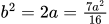 ,
 ; समीकरण (b)।
 gives
 , and
 . So ,
 ,
 :
 .
बिंदुओं (1, 0), (0, −6) और (3, 4) से गुजरने वाले वृत्त का समीकरण है
The equation of the circle which passes through the points (1, 0), (0, −6) and (3, 4) is
(c) में तीनों बिंदु रखने पर मान शून्य आता है।
Check the points in (c): (1, 0) gives 4 − 142 + 138 = 0; (0, −6) gives 144 − 282 + 138 = 0; (3, 4) gives 36 + 64 − 426 + 188 + 138 = 0. All three lie on it.
एक चर समतल स्थिर बिंदु (a, b, c) से गुजरता है और अक्षों को A, B, C पर काटता है। गोले OABC (O मूल बिंदु) के केंद्र का बिंदुपथ है
A variable plane passes through a fixed point (a, b, c) and cuts the axes in A, B and C respectively. The locus of the centre of the sphere OABC, O being the origin, is
अंतःखंड  ; (a, b, c) रखने पर
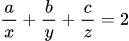 ।
If the centre is  , the intercepts are and the plane is
 . It passes through (a, b, c), so
 .
समतलों  और
 की प्रतिच्छेदन रेखा से गुजरने वाले और समतल
 के लंबवत समतल का समीकरण है
The equation of the plane passing through the line of intersection of the planes , , and perpendicular to the plane is given by
 से
 ।
Plane:  . Perpendicularity:
 gives . The plane is
 , i.e. .
फलन  का प्रतिलोम है
The inverse of the function is
 , अतः
 , y > 0।
 , so and , with y > 0 since
 is always positive.
फलन  के लिए
 और f(0) = 0 द्वारा परिभाषित है। निम्नलिखित में से कौन-सा सही है?
A function is defined as for and f(0) = 0. Which one of the following is correct in respect of the above function?
x > 0 पर −1 और x ऋणात्मक पर +1; सीमाएँ भिन्न, अतः असंतत।
 , so f(x) = −1 for x > 0 and +1 for x less than 0. The left and right limits at 0 differ, so f is discontinuous at 0.
यदि  (अनंत तक) है, तो
 बराबर है
If (to infinity), then is equal to
 का अवकलन करके
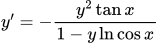 ।
 , so . Differentiating:
 . Hence
 and .
निम्नलिखित पर विचार कीजिए:
1.  , x = 0 पर संतत है
2.  , x = 0 पर असंतत है
3.  , x = 0 पर संतत है
उपर्युक्त में से कौन-से सही हैं?
Consider the following:
1. is continuous at x = 0
2. is discontinuous at x = 0
3. is continuous at x = 0
Which of the above are correct?
1 सत्य;  की x → 0 पर कोई सीमा नहीं, अतः 2 सत्य और 3 असत्य।
A polynomial is continuous, so 1 is true. oscillates between −1 and 1 as x → 0 and has no limit, so any function containing it (2 and 3) is discontinuous at 0: 2 is true and 3 is false.
निम्नलिखित कथनों पर विचार कीजिए:
1. वक्र के किसी बिंदु पर उस बिंदु पर स्पर्शरेखा की ढलान देता है।
2. यदि a(t) कण का त्वरण है, तो  कण का वेग देता है।
3. यदि s(t) समय t पर कण का विस्थापन है, तो  उस क्षण उसका त्वरण देता है।
उपर्युक्त में से कौन-सा/से कथन सही है/हैं?
Consider the following statements:
1. at a point on the curve gives slope of the tangent at that point.
2. If a(t) denotes acceleration of a particle, then gives velocity of the particle.
3. If s(t) gives displacement of a particle at time t, then gives its acceleration at that instant.
Which of the above statements is/are correct?
1 और 2 सही; वेग है, त्वरण नहीं।
1 and 2 are correct. The derivative of displacement is velocity, not acceleration, so 3 is wrong.
यदि  है, तो बराबर है
If , then is equal to
 , अतः अवकलज 0।
 , and
 . So y is constant and
 .
 किसके बराबर है?
What is equal to?
 ; समाकल
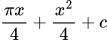 ।
 , so the integrand is
 and the integral is .
 में फलन
 के लिए
 ,
 के लिए
 और
 के लिए
 है। f′(x) के बारे में कौन-सा सही है?
A function is defined in by for , for , and for  . Which one of the following is correct in respect of the derivative of the function, i.e., f′(x)?
x = 1 पर बायाँ अवकलज −2 और दायाँ 1; अतः  केवल
 पर।
On (0, 1) the derivative is −2x. At x = 1 the left derivative is −2 but the right derivative of  is 1, so f is not differentiable at 1. Hence only for .
फलन  के संबंध में कौन-सा सही है?
Which one of the following is correct in respect of the function ?
स्थानीय उच्चिष्ठ  , निम्निष्ठ
 ।
 ,
 at
 . The local maximum (at
 ) is and the local minimum (at
 ) is , so the maximum is larger.
निम्नलिखित कथनों पर विचार कीजिए:
1. किसी बिंदु पर f(x) का अवकलज अस्तित्व में न हो।
2. किसी बिंदु पर f(x) का अवकलज परिमित रूप से अस्तित्व में हो।
3. किसी बिंदु पर f(x) का अवकलज (ज्यामितीय रूप से) अनंत हो।
उपर्युक्त में से कौन-से कथन सही हैं?
Consider the following statements:
1. Derivative of f(x) may not exist at some point.
2. Derivative of f(x) may exist finitely at some point.
3. Derivative of f(x) may be infinite (geometrically) at some point.
Which of the above statements are correct?
|x| (अस्तित्व नहीं),  (परिमित),
 (अनंत, ऊर्ध्वाधर स्पर्शरेखा)।
All three can happen: |x| has no derivative at 0; has a finite derivative; has a vertical tangent (infinite derivative) at 0.
 का अधिकतम मान है
The maximum value of is
x = e पर अधिकतम, मान  ।
Derivative  at x = e, where the value is ; the function increases before e and decreases after.
फलन  है
The function is
 , न f(x) न −f(x)।
, which is neither f(x) nor −f(x) in general, so f is neither even nor odd.
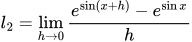
यदि 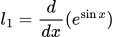 ,
 और
 , तो निम्नलिखित में से कौन-सा सही है?
If , and , then which one of the following is correct?
 ;
 का अवकलज
 ।
 and are both the derivative,
 . , whose derivative is again
 .
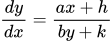 का व्यापक हल वृत्त तभी दर्शाता है जब
The general solution of represents a circle only when
हल  ; वृत्त हेतु
 ।
Separating:  gives
 , i.e.
 . For a circle the and
 coefficients must be equal and non-zero:
 .
यदि  और
 , तो निम्नलिखित में से कौन-सा सही है?
If and , then which one of the following is correct?
 ;
 , अतः m = 0।
The first is just the value at  :
 . For the second, while x grows, so the limit is 0.