
यदि  है, तो
 किसके बराबर है?
If , then what is equal to?
 ।
This is 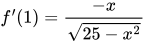 at 1, i.e.
 .
यदि 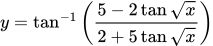 है, तो
 किसके बराबर है?
If , then what is equal to?
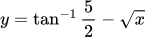 ;
 ।
Dividing by 2:  , so and .
फलन  के संबंध में कौन-सा सही है?
Which one of the following is correct in respect of the function ?
 ; वर्धमान।
 . On
 ,
 and
 , so
 : increasing.
 किसके बराबर है?
What is equal to?
 पर मान
 । (बाईं ओर से
 ; अपेक्षित उत्तर दक्षिण सीमा।)
 . As the ratio tends to
 . (From the left it tends to
 , so strictly the two-sided limit does not exist; the intended answer is the right-hand value.)
A से  में फलन
 से परिभाषित है, जहाँ A = (1, 4)। फलन का परिसर क्या है?
A function  from A to is defined by the equation where A = (1, 4). What is the range of the function?
 ; परिसर [1, 5)।
 : minimum 1 at
 (inside), and values approach
 without reaching it (
 is smaller). Range [1, 5).
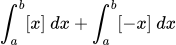 किसके बराबर है, जहाँ [.] महत्तम पूर्णांक फलन है?
What is equal to, where [.] is the greatest integer function?
 ; योग
 ।
For non-integer  , (integers are only isolated points). So the sum is
 .
 किसके बराबर है?
What is equal to?
दो त्रिभुज, प्रत्येक  ; कुल 9।
Two triangles of base 3 and height 3:  .
 किसके बराबर है, जहाँ c समाकलन अचर है?
What is equal to, where c is the constant of integration?
 ।
 .
 किसके बराबर है, जहाँ c समाकलन अचर है?
What is equal to, where c is the constant of integration?
 ।
 , and .
 किसके बराबर है?
What is equal to?
अवकलज  ; समाकल
 ।
For  ,
 . So the integral is
 . (Simply evaluating
 at the ends would give
 , which is wrong because that function jumps at 0.)
फलन  निम्नलिखित में से किस अंतराल में ह्रासमान है?
In which one of the following intervals is the function decreasing?
 पर ह्रासमान; (−∞, 2] उसमें है।
 for . Of the options only (−∞, 2] lies entirely in that region.
वक्र कुल  , जहाँ
 ,
 स्वेच्छ अचर हैं, का अवकल समीकरण है
The differential equation of the family of curves , where , are arbitrary constants, is
 ।
Differentiating twice gives .
बिंदु (−1, −2) से होकर जाने वाले और  को संतुष्ट करने वाले वक्र का समीकरण है
The equation of the curve passing through the point (−1, −2) which satisfies , is
 ;
 से गुणा करने पर
 ।
 . At (−1, −2):
 , so . Multiplying by : .
उस अवकल समीकरण की कोटि क्या है जिसका हल  है, जहाँ
 ,
 ,
 और
 स्वेच्छ अचर हैं?
What is the order of the differential equation whose solution is , where , , and are arbitrary constants?
चार स्वतंत्र अचर; कोटि 4।
The four functions  ,
 ,
 and 1 are independent, so the four constants are essential and the order is 4.
अवकल समीकरण 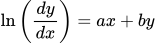 का हल क्या है, जहाँ c स्वेच्छ अचर है?
What is the solution of the differential equation , where c is an arbitrary constant?
 ;
 ।
 , so . Integrating:
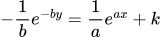 , i.e. .
यदि  और
 है, तो
 किसके बराबर है?
If and , then what is equal to?
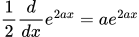 ।
 .
यदि  है, तो कौन-सा सही है?
If , then which one of the following is correct?
 ; पुनः अवकलन से
 ।
. Differentiating:  , so .
त्रिज्यखंड के आकार की एक क्यारी को 40 m लंबे तार से घेरा गया है। यदि क्यारी का क्षेत्रफल अधिकतम हो, तो त्रिज्यखंड की त्रिज्या क्या है?
A flower-bed in the form of a sector has been fenced by a wire of 40 m length. If the flower-bed has the greatest possible area, then what is the radius of the sector?
क्षेत्रफल  ;
 m पर अधिकतम।
 , so area
 , greatest at m.
 का न्यूनतम मान क्या है, जहाँ
 ?
What is the minimum value of , where ?
 पर
 ; न्यूनतम
 ।
 is least at , value ; the cube root is increasing, so the minimum is .
यदि  है, तो
 पर का मान क्या है?
If , then what is the value of at ?
 ,
 ; उत्तर (a)।
Near  :
 , so
 and
 . At :
 , and . So
 .
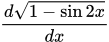 किसके बराबर है, जहाँ
 ?
What is equal to, where ?
यहाँ मान  ; अवकलज
 ।
 here (since
 ). Its derivative is .
 किसके बराबर है, जहाँ c समाकलन अचर है?
What is equal to, where c is the constant of integration?
 से
 ।
Divide by  :
 . With :
 .
मान लीजिए  और
 , जहाँ
 और
 । तब
 किसके बराबर है?
Let and , where and . Then what is equal to?
 ।
 .
अवकल समीकरण  का हल क्या है, जहाँ c स्वेच्छ अचर है?
What is the solution of the differential equation , where c is an arbitrary constant?
 से
 ;
 ।
Let :  . So
 , giving , i.e. .
 किसके बराबर है?
What is equal to?
 ,
 पर
 ।
With  :
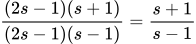 . At :
 .