
मान लीजिए  प्रकार की सभी भिन्न संख्याओं का एक समुच्चय S है, जहाँ
 है। समुच्चय S की प्रमुखता क्या है?
Let S be a set of all distinct numbers of the form , where . What is the cardinality of the set S?
प्रत्येक भिन्न मान का एक ही न्यूनतम रूप है; HCF 1 वाले युग्म गिनने पर 6 + 3 + 4 + 3 + 5 + 2 = 23।
Each distinct value has exactly one form in lowest terms, so count pairs (p, q) with HCF 1. For p = 1 to 6 the counts are 6, 3, 4, 3, 5, 2, giving 23.
यदि  और
 है, तो
 का एक मूल निम्नलिखित में से किस अंतराल में है?
If and , then has a root in which one of the following intervals?
 और
 ; चिह्न बदलता है, अतः (0, 2) में मूल है।
Let  . Then and . The sign changes, so there is a root in (0, 2).
यदि  और
 है, तो निम्नलिखित में से कौन-सा/से सही है/हैं?<br>1.
 <br>2.

If and , then which of the following is/are correct?<br>1. <br>2.
 ,
 ;
 सही।
 में −2 शामिल है, अतः कथन 2 सटीक नहीं।
and . So , which is statement 1. ; it includes  (which is not in B), so statement 2, which leaves out −2, is not exact. Only 1 is correct.
यदि A, घात 3 का एक वर्ग आव्यूह है और det A = 5 है, तो  किसके बराबर है?
If A is a square matrix of order 3 and det A = 5, then what is equal to?
 ; व्युत्क्रम का सारणिक
 ।
 , so
 .
 किसके बराबर है, जहाँ
 इकाई का घनमूल है?
What is equal to, where is the cube root of unity?
 से योग
 ।
Since :  ,
 ,
 . The sum
 .
यदि  है, जहाँ
 एक सम्मिश्र संख्या है, तो निम्नलिखित में से कौन-सा सही है?
If , where is a complex number, then which one of the following is correct?
वास्तविक भाग  ।
 , whose real part is
 . This is 0 when
 .
 किसके बराबर है?
What is equal to?
 पंक्ति गुणा
 आव्यूह
 पंक्ति:
 ।
A row times a matrix is a row. Its entries are the row dotted with each column:  ,
 ,
 .
एक समतल में 15 बिंदुओं में से n बिंदु एक ही सरल रेखा पर हैं। इन बिंदुओं को मिलाकर 445 त्रिभुज बनाए जा सकते हैं। n का मान क्या है?
Out of 15 points in a plane, n points are in the same straight line. 445 triangles can be formed by joining these points. What is the value of n?
 ।
 , i.e.
 , so
 and
 .
यदि  है, तो z का काल्पनिक भाग किसके बराबर है?
If , then what is the imaginary part of z equal to?
दोनों पद संयुग्मी हैं, योग वास्तविक है; काल्पनिक भाग 0।
The two terms are complex conjugates, so their sum is  , a real number. The imaginary part is 0.
यदि समीकरण  के दोनों मूल −3 और 5 के बीच हैं, तो निम्नलिखित में से कौन-सा सही है?
If both the roots of the equation lie between −3 and 5, then which one of the following is correct?
मूल  ;
 और
 ।
 , so the roots are
 and
 . We need and
 , i.e.
 .
समीकरण  (जहाँ z एक सम्मिश्र संख्या है) के भिन्न हलों की संख्या क्या है?
What is the number of distinct solutions of the equation (where z is a complex number)?
 , अतः z शून्य या शुद्ध काल्पनिक; हल
 , कुल तीन।
is real and not positive, so z is 0 or purely imaginary. For  :
 gives
 or
 . Solutions: , three in all.
27, 8 और 12 को अपने तीन पदों के रूप में रखने वाली कितनी गुणोत्तर श्रेढ़ियाँ संभव है/हैं?
How many geometric progressions is/are possible containing 27, 8 and 12 as three of its/their terms?
8, 12, 27 में अनुपात  और
 ; अनुपात
 वाली हर श्रेढ़ी में ये तीनों पद आते हैं, अतः अनंत।
In order 8, 12, 27 the ratios are and  . Any GP with ratio
 (k a positive integer) contains 8, then 12 after k steps and 27 after 3k steps. So there are infinitely many.
मान लीजिए R, A = {1, 2, 3, 4} से B = {1, 3, 5} तक एक संबंध है, जहाँ R = {(a, b) : a < b, a ∈ A और b ∈ B}।  किसके बराबर है?
Let R be a relation from A = {1, 2, 3, 4} to B = {1, 3, 5} such that R = {(a, b) : a < b, where a ∈ A and b ∈ B}. What is equal to?
 से B से A और फिर R से B: 3 से 3, 5 और 5 से 3, 5; अतः {(3,3), (3,5), (5,3), (5,5)}।
R = {(1,3), (1,5), (2,3), (2,5), (3,5), (4,5)}. goes from B back to A by and then to B by R. From 3 we reach 1 or 2, then 3 or 5; from 5 we reach 1, 2, 3 or 4, then 3 or 5 (via 1 or 2). So it is {(3,3), (3,5), (5,3), (5,5)}.
अंकों 0, 1, 2, 3 और 4 का बिना दोहराव के प्रयोग करके 3 से विभाज्य एक पाँच अंकीय संख्या बनानी है। यह कितने प्रकार से किया जा सकता है?
A five-digit number divisible by 3 is to be formed using the digits 0, 1, 2, 3 and 4 without repetition of digits. What is the number of ways this can be done?
पाँचों अंकों का योग 10 है, जो 3 से विभाज्य नहीं; अतः कोई संख्या नहीं बनती।
All five digits must be used, and their sum is  , which is not divisible by 3. So no such number exists.
 किसके बराबर है?
What is equal to?
 बार-बार लगाने पर उत्तर
 ।
The sum adds  . Using repeatedly:
 , then
 ,
 ,
 , and finally
 .
मान लीजिए a, x, y, z, b समांतर श्रेढ़ी में हैं, जहाँ  है। मान लीजिए a, p, q, r, b हरात्मक श्रेढ़ी में हैं, जहाँ
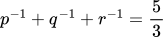 है।<br>ab का मान क्या है?
Let a, x, y, z, b be in AP, where . Let a, p, q, r, b be in HP, where .<br>What is the value of ab?
 ;
 ,
 ।
 , so
 , the middle of a, b:
 . The reciprocals
 are in AP, so
 and
 . Then
 gives
 .
मान लीजिए a, x, y, z, b समांतर श्रेढ़ी में हैं, जहाँ है। मान लीजिए a, p, q, r, b हरात्मक श्रेढ़ी में हैं, जहाँ है।<br>xyz का मान क्या है?
Let a, x, y, z, b be in AP, where . Let a, p, q, r, b be in HP, where .<br>What is the value of xyz?
a, b = 1, 9; श्रेढ़ी 1, 3, 5, 7, 9;  ।
, , so {a, b} = {1, 9}. The AP is 1, 3, 5, 7, 9 (or reversed), so  .
मान लीजिए a, x, y, z, b समांतर श्रेढ़ी में हैं, जहाँ है। मान लीजिए a, p, q, r, b हरात्मक श्रेढ़ी में हैं, जहाँ है।<br>pqr का मान क्या है?
Let a, x, y, z, b be in AP, where . Let a, p, q, r, b be in HP, where .<br>What is the value of pqr?
व्युत्क्रम  ;
 ।
The reciprocals run from 1 to  in AP: . So
 ,
 ,
 and
 .
एक समांतर श्रेढ़ी का छठा पद 2 है और उसका सार्व अंतर 1 से अधिक है।<br>सार्व अंतर क्या हो कि पहले, चौथे और पाँचवें पदों का गुणनफल अधिकतम हो?
The sixth term of an AP is 2 and its common difference is greater than 1.<br>What is the common difference of the AP so that the product of the first, fourth and fifth terms is greatest?
 ;
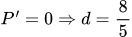 (
 ), जहाँ अधिकतम है।
With  : product
 .
 gives
 , so
 or
 . With , , and
 there, so it is a maximum.
एक समांतर श्रेढ़ी का छठा पद 2 है और उसका सार्व अंतर 1 से अधिक है।<br>प्रथम पद क्या हो कि पहले, चौथे और पाँचवें पदों का गुणनफल अधिकतम हो?
The sixth term of an AP is 2 and its common difference is greater than 1.<br>What is the first term of the AP so that the product of the first, fourth and fifth terms is greatest?
 ।
With , .
मान लीजिए  है।<br>c का मान क्या है?
Let .<br>What is the value of c?
सारणिक का प्रसार  है;
 ।
Expanding the determinant gives , so .
मान लीजिए है।<br> का मान क्या है?
Let .<br>What is the value of ?
 पर सारणिक
 ।
is the value at :  .
n भुजाओं वाले एक बहुभुज के अंतःकोण समांतर श्रेढ़ी में हैं। सबसे छोटा कोण 120° और सार्व अंतर 5° है।<br>n के कितने संभव मान हो सकते हैं?
The interior angles of a polygon of n sides are in AP. The smallest angle is 120° and the common difference is 5°.<br>How many possible values can n have?
 ; n = 16 पर सबसे बड़ा कोण 195° होगा जो संभव नहीं; अतः एक मान।
Sum of angles:  , which gives
 , so
 or
 . For
 the largest angle would be
 , impossible for an interior angle of a convex polygon. So only : one value.
n भुजाओं वाले एक बहुभुज के अंतःकोण समांतर श्रेढ़ी में हैं। सबसे छोटा कोण 120° और सार्व अंतर 5° है।<br>बहुभुज का सबसे बड़ा अंतःकोण क्या है?
The interior angles of a polygon of n sides are in AP. The smallest angle is 120° and the common difference is 5°.<br>What is the largest interior angle of the polygon?
पर सबसे बड़ा कोण  ।
With , the largest angle is  .
यदि  और
 है, तो
 के सारणिक का मान क्या है?
If and , then what is the value of the determinant of ?
आव्यूह 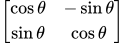 , सारणिक 1।
 , whose determinant is
 .