
यदि  को 6 से विभाजित किया जाए, तो शेषफल क्या है?
What is the remainder when is divided by 6?
 हर
 के लिए; शेषफल 4।
 ,
 , and so on: every power of 4 leaves remainder 4 on division by 6. So
 .
यदि  जहाँ x, y, z धनपूर्ण संख्याएँ हैं, तो z किसके बराबर है?
If where x, y, z are natural numbers, then what is z equal to?
 ,
 ,
 ;
 ।
; ; . So  ,
 , .
k के किस मान के लिए  का एक गुणनखण्ड
 है?
For what value of k is a factor of ?
 :
 ।
Put :  .
 किसके बराबर है?
What is equal to?
हर  , अंश
 ; मान
 ।
Denominator  . Numerator
 . The value is .
गुणनफल  के इकाई के स्थान में कौन-सा अंक है?
The digit in the units place of the product is
गुणनफल में 90 है, अतः इकाई अंक 0।
The product contains 90 (and also  ), so it ends in 0.
 का वर्गमूल क्या है?
The square root of is
 :
 ; वर्गमूल 2।
With :  . Its square root is 2.
 को 12 से विभाजित करने पर शेषफल क्या है?
What is the remainder obtained when is divided by 12?
शेषफल 5, 7, 9;  ।
Remainders on division by 12:  ,
 ,
 .
 , so the remainder is 3.
निम्नलिखित कथनों पर विचार कीजिए :
1. समीकरण  का x और y के लिए पूर्णांकों में कोई हल नहीं है।
2. समीकरण  का x और y के लिए पूर्णांकों में कोई हल नहीं है।
उपर्युक्त कथनों में से कौन-सा/से सही है/हैं?
Consider the following statements :
1. The equation has no solution in integers for x and y.
2. The equation has no solution in integers for x and y.
Which of the above statements is/are correct?
 जो 11 को विभाजित करता है, अतः हल है (1 ग़लत)।
 , 7 को विभाजित नहीं करता (2 सही)।
 has integer solutions exactly when
 divides c. 173 is prime and does not divide 1990, so , which divides 11: solutions exist, so 1 is wrong. does not divide 7: no solution, so 2 is correct.
एक छात्र को किसी संख्या को 25 से गुणा करने के लिए कहा गया। उसने उस संख्या को 25 के स्थान पर 52 से गुणा कर दिया और उसका उत्तर, सही उत्तर से 324 ज्यादा था। जिस संख्या को गुणा किया जाना था वह क्या है?
A student was asked to multiply a number by 25. He instead multiplied the number by 52 and got the answer 324 more than the correct answer. The number to be multiplied was
 ।
 .
यदि संख्या 357P25Q, 3 और 5 दोनों से विभाज्य है, तो (P, Q) के सम्भव युग्मों की संख्या क्या है?
What is the number of possible pairs of (P, Q) if the number 357P25Q is divisible by both 3 and 5?
 :
 ;
 :
 ; कुल 7 युग्म।
For 5, or 5. Digit sum  must be a multiple of 3. : (3 pairs). :
 , so (4 pairs). Total 7.
दो क्रमागत विषम पूर्णांकों के वर्गों का अन्तर हमेशा किससे विभाज्य है?
The difference between the squares of two consecutive odd integers is always divisible by
 ; सदैव 8 से विभाज्य।
, always divisible by 8 (but not always by 16, e.g.  ).
व्यंजक  किससे विभाज्य है?
The expression is divisible by
व्यंजक  ; दोनों से विभाज्य।
The expression  . It is divisible by both.
₹ 15,000 की राशि पर 2 वर्षों के लिए चक्रवृद्धि ब्याज तथा साधारण ब्याज में, एक ही ब्याज दर R प्रतिशत वार्षिक पर, ₹ 96 का अन्तर है। R का मान क्या है?
The difference between compound interest and simple interest at the same rate of interest R percent per annum on an amount of ₹ 15,000 for 2 years is ₹ 96. What is the value of R?
 ।
For 2 years, CI − SI  :
 .
यदि संख्या  ,
 से विभाज्य है, तो m का अधिकतम मान क्या है?
What is the maximum value of m if the number is divisible by ?
5 की घातें:  ।
Powers of 5: 35, 45, 55, 60 give one each, 124 gives none and  gives two. Total
 .
एक दूध विक्रेता यह दावा करता है कि वह दूध को केवल लागत कीमत पर बेच रहा है, किन्तु उसे 20% लाभ हो रहा है, क्योंकि उसने दूध में कुछ मात्रा में पानी मिलाया है। इस मिश्रण में दूध कितना प्रतिशत है?
A milkman claims to sell milk at its cost price only, but he is making a profit of 20% since he has mixed some amount of water in the milk. What is the percentage of milk in the mixture?
1 लीटर दूध से 1.2 लीटर मिश्रण; दूध  ।
For a 20% profit, 1 litre of milk is sold as 1.2 litres of mixture. Milk share  .
किसी राशि में 6 वर्षों में साधारण ब्याज पर 60% की वृद्धि होती है। ₹ 12,000 की राशि पर, 3 वर्षों के लिए उसी ब्याज दर पर चक्रवृद्धि ब्याज क्या होगा?
There is 60% increase in an amount in 6 years at simple interest. What will be the compound interest on ₹ 12,000 after 3 years at the same rate of interest?
दर 10%; CI  , अर्थात् ₹ 3,972।
Rate  . CI
 , i.e. ₹ 3,972.
16 लीटर के एक मिश्रण में दूध और पानी 5 : 3 के अनुपात में हैं। यदि इस मिश्रण में 4 लीटर दूध और मिला दिया जाए, तो नए मिश्रण में दूध का पानी से अनुपात क्या होगा?
16 litres of a mixture contains milk and water in the ratio 5 : 3. If 4 litres of milk is added to this mixture, the ratio of milk to water in the new mixture would be
दूध 10, पानी 6;  ।
Milk 10 L, water 6 L. After adding 4 L milk: .
एक व्यक्ति अपनी आय के 10% की बचत कर पाया। किन्तु 2 वर्ष बाद, जब उसकी आय 20% बढ़ गई, तब भी वह पहले जितनी ही राशि की बचत कर सका। उसका व्यय कितने प्रतिशत बढ़ गया है?
A person could save 10% of his income. But 2 years later, when his income increased by 20%, he could save the same amount only as before. By how much percentage has his expenditure increased?
व्यय 90 से 110; वृद्धि  ।
Income 100, saving 10, expenditure 90. New income 120, saving 10, expenditure 110. Increase  .
किसी मूलधन पर 10% प्रतिवर्ष की दर से साधारण ब्याज कितने समय में मूलधन का  गुना हो जाएगा?
In how much time would the simple interest on a principal amount be times the principal amount at 10% per annum?
 वर्ष।
 years.
एक व्यक्ति 32 km धारा की दिशा में तथा 14 km धारा की विपरीत दिशा में नाव खेता है और उसे प्रत्येक दूरी को तय करने में 6 घण्टे लगते हैं। धारा की चाल क्या है?
A man rows downstream 32 km and 14 km upstream, and he takes 6 hours to cover each distance. What is the speed of the current?
धारा  km/घण्टा।
Downstream speed  , upstream
 km/hr. Current
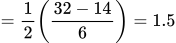 km/hr.
एक कार किसी दूरी की पहली एक-तिहाई दूरी 10 km/घण्टा की चाल से, अगली एक-तिहाई दूरी 20 km/घण्टा की चाल से तथा आखिरी एक-तिहाई दूरी 60 km/घण्टा की चाल से तय करती है। पूरी यात्रा में कार की औसत चाल क्या है?
A car travels the first one-third of a certain distance with a speed of 10 km/hr, the next one-third distance with a speed of 20 km/hr and the last one-third distance with a speed of 60 km/hr. The average speed of the car for the whole journey is
प्रत्येक भाग 60 km: समय  घण्टे, दूरी 180 km; औसत 18 km/घण्टा।
Take each third as 60 km. Time  hours for 180 km, so the average speed is 18 km/hr.
c km की दूरी पर स्थित दो स्थानों से A और B दो व्यक्ति एक ही दिशा में एक ही समय में चलना शुरू करते हैं। यदि A, p km/घण्टा की चाल से चलता है तथा B, q km/घण्टा की चाल से चलता है, तो B से आगे निकलने से पहले A कितनी दूरी तय करता है?
Two persons A and B start simultaneously from two places c km apart, and walk in the same direction. If A travels at the rate of p km/hr and B travels at the rate of q km/hr, then A has travelled before he overtakes B a distance of
समय  ; A की दूरी
 km।
A gains  km every hour, so he catches B after hours, having walked km.
k के किस मान के लिए समीकरणों  और
 का युग्म, x का एक अद्वितीय धनात्मक हल देगा?
For which value of k does the pair of equations and yield a unique positive solution of x?
 ; विविक्तकर
 ; धनात्मक मूल
 के लिए
 । (कड़ाई से
 पर भी केवल एक धनात्मक मूल है; अभिप्रेत उत्तर
 ।)
Put  : . For a single (repeated) root the discriminant
 must be 0, so
 ; the root is positive only for , giving
 . (The intended answer is the tangency case ; strictly, also gives roots
 with only one positive.)
एक व्यक्ति अपराह्न 4 और 5 बजे के बीच बाज़ार जाता है। जब वह वापस आता है, तो पाता है कि घण्टे व मिनट की सूइयों ने अपने स्थान परस्पर बदल लिए हैं। कितने समय (अनुमानतः) के लिए वह अपने घर से बाहर था?
A person goes to a market between 4 p.m. and 5 p.m. When he comes back, he finds that the hour hand and minute hand have interchanged their positions. For how much time (approximately) was he out of his house?
सूइयाँ स्थान बदलें तो दोनों मिलकर  घूमती हैं:
 मिनट।
When the hands swap places, the two hands together have covered exactly one full circle: the minute hand moves  and the hour hand
 per minute, so minutes (he left at about 4:26.85 and returned at about 5:22.24).
P, Q की अपेक्षा दोगुनी दक्षता से काम करता है जबकि P और Q मिलकर R की अपेक्षा तीन गुनी दक्षता से काम करते हैं। यदि किसी कार्य को P, Q और R मिलकर करें, तो उनकी आय उनमें किस अनुपात में बँटेगी?
The efficiency of P is twice that of Q, whereas the efficiency of P and Q together is three times that of R. If P, Q and R work together on a job, in what ratio should they share their earnings?
Q = 1, P = 2, R = 1; अनुपात $2:1:1$।
Let Q = 1. Then P = 2, and  . Earnings are shared as efficiency: $2:1:1$.