
मान लीजिए कि  एक (यूनिटि) का घनमूल है और
 है। मान लीजिए P और Q, तथा
 द्वारा परिभाषित सम्मिश्र समतल पर बिंदुएँ हैं। यदि O मूलबिंदु है, तो OP और OQ के बीच का कोण क्या है?
Suppose is a cube root of unity with . Suppose P and Q are the points on the complex plane defined by and . If O is the origin, then what is the angle between OP and OQ?
और इकाई वृत्त पर कोणांक 120° और 240° पर हैं; अतः OP और OQ के बीच का कोण 120° है।
 and
 . Both lie on the unit circle at arguments 120° and 240°, so the angle between OP and OQ is 240° − 120° = 120°.
मान लीजिए कि धनात्मक संख्याओं x और y के बीच एक संबंध  इस प्रकार दिया गया है कि
 , यदि और केवल यदि
 है। तो निम्नलिखित में से कौन-सा एक सही है?
Suppose there is a relation between the positive numbers x and y given by if and only if . Then which one of the following is correct?
सममित नहीं:  पर
 नहीं। संक्रामक नहीं:
 ,
 पर
 नहीं (9 > 4)।
 केवल
 (धनात्मक पूर्णांकों) के लिए सत्य है,
 के लिए नहीं। सभी धनात्मक वास्तविक संख्याओं के लिए कोई विकल्प पूरी तरह सही नहीं; धनात्मक पूर्णांक मानने पर संबंध स्वतुल्य है पर सममित/संक्रामक नहीं। सर्वोत्तम विकल्प (a)।
Not symmetric: (1 ≤ 4) but not (2 > 1). Not transitive: (9 ≤ 9) and (3 ≤ 4), but 9 > 4, so not . Reflexive needs , which holds for (all positive integers) but fails for (e.g. 0.5 > 0.25). Strictly, for all positive reals no option is fully correct; the intended answer treats x, y as positive integers, where the relation is reflexive but neither symmetric nor transitive. Best option: (a).
यदि x के सभी वास्तविक मानों के लिए  है, तो निम्नलिखित में से कौन-सा एक सही है?
If for all real values of x, then which one of the following is correct?
सभी x के लिए धनात्मक होने हेतु विविक्तकर  , अर्थात्
 ।
An upward parabola stays positive for all x only if its discriminant is negative: , i.e. .
यदि  , जहाँ
 है, तो
 का मूल आयाम क्या है?
If , where , then what is the fundamental amplitude of ?
 ;
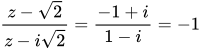 , जिसका आयाम
 है।
 , so . Then
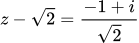 and
 , so the ratio is
 , whose amplitude is .
यदि  के लिए
 है, तो
 किसके बराबर है?
If for , then what is equal to?
 लें;
 के लिए
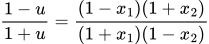 , अतः
 । अन्य विकल्पों में
 ।
Take . With : , so  . Also
 , as the relation needs (
 ). Options (b), (c), (d) give
 .
फलन  का परास क्या है, जहाँ
 है?
What is the range of the function where ?
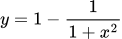 ;
 पर 0 और y कभी 1 नहीं होता। परास
 ।
. At ,  ; as
 ,
 but never reaches 1. Range .
एक सरल रेखा x और y अक्षों को क्रमशः P और Q पर प्रतिच्छेदित करती है। यदि (3, 5), PQ का मध्य-बिंदु है, तो त्रिभुज OPQ का क्षेत्रफल क्या है?
A straight line intersects x and y axes at P and Q respectively. If (3, 5) is the middle point of PQ, then what is the area of the triangle OPQ?
P = (6, 0), Q = (0, 10); क्षेत्रफल  वर्ग इकाई।
P = (6, 0) and Q = (0, 10). Area square units.
यदि त्रिज्या b इकाई और केंद्र (0, b) का एक वृत्त, रेखा  को स्पर्श करता है, तो b का मान क्या है?
If a circle of radius b units with centre at (0, b) touches the line , then what is the value of b?
(0, b) से रेखा की दूरी  , अतः
 ।
Distance from (0, b) to  is
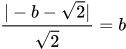 , so
 , .
फलन  पर विचार कीजिए।
फलन  का अधिकतम मान क्या है?
Consider the function .
What is the maximum value of the function ?
 लेने पर
 ;
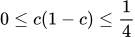 से
 । अधिकतम 4।
With  :
 . Since ,
 . Maximum 4 (at
 or 1).
फलन पर विचार कीजिए।
फलन का न्यूनतम मान क्या है?
Consider the function .
What is the minimum value of the function ?
 पर न्यूनतम मान
 ।
From with , the least value is at : .
फलन पर विचार कीजिए।
निम्नलिखित कथनों पर विचार कीजिए :
1.  का कोई हल नहीं है।
2.  का एक हल है।
उपर्युक्त कथनों में से कौन-सा/से सही है/हैं?
Consider the function .
Consider the following statements:
1. has no solution.
2. has a solution.
Which of the above statements is/are correct?
 का परास [3, 4] है; 2 इसमें नहीं,
 इसमें है। दोनों कथन सही।
The range of is [3, 4]. 2 is outside it (no solution) and is inside it (a solution exists). Both statements are correct.
वक्रों  और
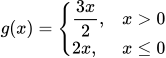 पर विचार कीजिए।
ये वक्र कहाँ प्रतिच्छेद करते हैं?
Consider the curves and
Where do the curves intersect?
 :
 से
 , बिंदु (2, 3)।
 :
 से
 , बिंदु (−1, −2)। दोनों पर प्रतिच्छेद।
For  :
 gives , , point (2, 3). For
 :
 gives , , point (−1, −2). They meet at both points.
वक्रों और पर विचार कीजिए।
इन वक्रों द्वारा परिबद्ध क्षेत्रफल क्या है?
Consider the curves and
What is the area bounded by the curves?
 पर
 ;
 पर
 ; कुल
 वर्ग इकाई।
Between and , g lies above f. On :  . On :
 . Total
 square units.
फलन  पर विचार कीजिए।
फलन  के कितने हल हैं?
Consider the function .
How many solutions does the function have?
 रखने पर
 ;
 , अर्थात्
 : दो हल।
Put :  , i.e.
 . So
 or
 , giving
 and
 : two solutions.
फलन पर विचार कीजिए।
फलन  के कितने हल हैं?
Consider the function .
How many solutions does the function have?
 का स्थानीय उच्चिष्ठ 0 (
 ) और अल्पिष्ठ −4 है;
 का केवल एक वास्तविक मूल है। अतः एक हल।
With :  . The cubic has a local maximum 0 at and a local minimum −4 at ; since 4 is above the local maximum, has exactly one real root (t ≈ 1.12). One solution.
फलन  और
 , जहाँ
 अधिकतम पूर्णांक फलन है, पर विचार कीजिए।
 किसके बराबर है?
Consider the functions and , where is the greatest integer function.
What is equal to?
 पर
 ; समाकल
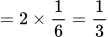 ।
For ,  , so . Integral
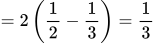 .
फलन और , जहाँ अधिकतम पूर्णांक फलन है, पर विचार कीजिए। किसके बराबर है?
Consider the functions and , where is the greatest integer function.
What is equal to?
 पर
 :
 ;
 पर
 :
 ; योग
 ।
On ,  :
 . On ,
 :
 . Total
 .
फलन  , जहाँ है, पर विचार कीजिए।
निम्नलिखित कथनों में से कौन-सा एक सही है?
Consider the function , where .
Which one of the following statements is correct?
f सर्वत्र संतत है।  पर बायाँ अवकलज 1, दायाँ 3; अतः अवकलनीय नहीं। पर अवकलनीय।
f is continuous everywhere. At : left derivative  , right derivative
 , so not differentiable. At it is smooth (
 near 0).
फलन , जहाँ है, पर विचार कीजिए।
निम्नलिखित कथनों में से कौन-सा एक सही है?
Consider the function , where .
Which one of the following statements is correct?
 :
 (
 पर ऋणात्मक);
 :
 । अतः
 में ह्रासमान और
 में वर्धमान।
For  :
 , , negative for and positive on
 . For
 :
 , . So f decreases on and increases on .
फलन , जहाँ है, पर विचार कीजिए।
निम्नलिखित कथनों में से कौन-सा एक सही है?
Consider the function , where .
Which one of the following statements is correct?
f,  तक ह्रासमान और उसके बाद वर्धमान है; अतः केवल एक स्थानीय अल्पिष्ठ ()।
f decreases up to and increases after it, so there is exactly one local minimum (at , value  ) and no local maximum.
फलन , जहाँ है, पर विचार कीजिए।
x-अक्ष, वक्र  और दो कोटियों तथा द्वारा परिबद्ध प्रदेश का क्षेत्रफल क्या है?
Consider the function , where .
What is the area of the region bounded by x-axis, the curve and the two ordinates and ?
 वर्ग इकाई।
On  ,
 .
 .
फलन , जहाँ है, पर विचार कीजिए।
x-अक्ष, वक्र और दो कोटियों तथा  द्वारा परिबद्ध प्रदेश का क्षेत्रफल क्या है?
Consider the function , where .
What is the area of the region bounded by x-axis, the curve and the two ordinates and ?
 वर्ग इकाई।
On  ,
 .
 .
दिया गया है कि 
निम्नलिखित कथनों पर विचार कीजिए :
1. अनुक्रम  , सार्व अंतर शून्य के साथ AP में है।
2. अनुक्रम  , सार्व अंतर शून्य के साथ AP में है।
उपर्युक्त कथनों में से कौन-सा/से सही है/हैं?
Given that .
Consider the following statements:
1. The sequence is in AP with common difference zero.
2. The sequence is in AP with common difference zero.
Which of the above statements is/are correct?
x के स्थान पर  रखने पर अंश वही रहता है पर
 का चिह्न बदलता है; अतः
 , अर्थात् सभी n के लिए
 (सममित अर्थ में;
 पर समाकल अनुचित है)। दोनों अनुक्रम सार्व अंतर शून्य वाले AP हैं।
Replace x by :  while
 . So , i.e. for every n (taking the integral in this symmetric sense; strictly it is improper at ). Every term is 0, so both sequences are AP with common difference zero.
दिया गया है कि  किसके बराबर है?
Given that .
What is equal to?
 से सभी n के लिए; अतः
 ।
By the substitution , , so every . Hence .
समीकरण  पर विचार कीजिए।
निम्नलिखित कथनों में से कौन-से सही नहीं हैं?
1. y, x के फलन के रूप में, सभी वास्तविक x के लिए परिभाषित नहीं है।
2. y, x के फलन के रूप में, पर संतत नहीं है।
3. y, x के फलन के रूप में, सभी x के लिए अवकलनीय है।
नीचे दिए गए कूट का प्रयोग कर सही उत्तर चुनिए।
Consider the equation .
Which of the following statements are <em>not</em> correct?
1. y as a function of x is not defined for all real x.
2. y as a function of x is not continuous at .
3. y as a function of x is differentiable for all x.
Select the correct answer using the code given below.
 पर
 (
 ),
 पर
 (
 )। फलन सभी x के लिए परिभाषित और 0 पर संतत है (कथन 1, 2 असत्य); 0 पर ढाल 1 और
 भिन्न, अतः अवकलनीय नहीं (कथन 3 असत्य)। तीनों सही नहीं।
If  :
 gives (needs ). If
 :
 gives
 (needs ). So for and for : defined for all real x and continuous at 0 (statements 1 and 2 are false), but the slopes 1 and differ at 0, so it is not differentiable there (statement 3 is false). All three are not correct.